Illuminated Visions: The Artists Turning Light Itself Into a Living Canvas
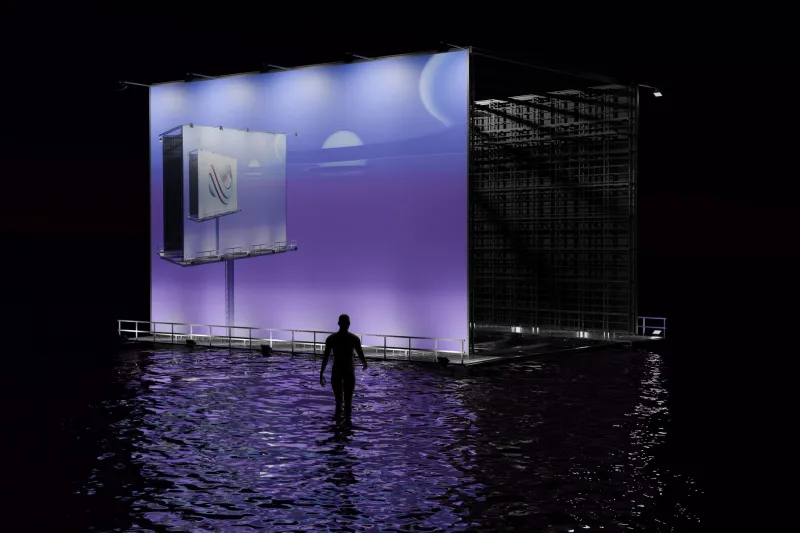
For most of art history, light was a means to an end—a way to illuminate a canvas, animate a sculpture, or set a mood within a gallery. Today, a growing cohort of contemporary American artists has flipped that equation entirely. Light is no longer the backdrop. It is the work itself.
From the neon-soaked studios of Los Angeles to the converted industrial lofts of Detroit, artists working across disciplines—painting, sculpture, performance, and digital media—are increasingly gravitating toward light as their defining medium. Their reasons are as varied as their practices: some are drawn to its ephemerality, others to its capacity for scale, and still others to its almost primal ability to command human attention. Together, they are reshaping the landscape of contemporary art in ways that galleries, museums, and festival organizers across the country are only beginning to fully absorb.
The Shift Toward Luminous Practice
The emergence of light-based art is not, strictly speaking, new. Artists like James Turrell and Dan Flavin established the conceptual and aesthetic groundwork for using light as medium decades ago. What is new is the democratization of the tools required to do so. Advances in LED technology, accessible projection mapping software, programmable microcontrollers, and affordable fiber-optic materials have placed capabilities once reserved for well-funded institutions directly into the hands of independent artists.
"Ten years ago, building an immersive light installation meant either having a significant grant or spending months learning to code from scratch," said Maya Osei, a multidisciplinary artist based in Atlanta whose recent series, Thresholds, uses layered LED panels and motion-sensing technology to create environments that respond to viewers in real time. "Now, the barrier to entry is dramatically lower. You can prototype something meaningful in your studio apartment and scale it up for a festival audience of thousands."
Osei's observation points to a broader democratization happening within the art world at large—one in which the line between maker and technologist has grown increasingly permeable. Many of today's most compelling light artists hold dual fluency in aesthetic theory and engineering, a combination that allows them to build work of genuine conceptual depth while executing it with technical precision.
Conceptual Depth Behind the Glow
It would be a mistake to interpret the popularity of light-based art as purely aesthetic—a preference for spectacle over substance. The artists driving this movement are deeply engaged with the conceptual implications of their chosen medium.
For New York-based artist Jonah Reyes, light represents the ultimate metaphor for perception and its limits. His installation Refraction Studies, which debuted at a warehouse space in the Red Hook neighborhood of Brooklyn, used prismatic glass structures and precisely angled spotlights to generate cascading color fields that shifted depending on where a viewer stood in the room. "Light is inherently relational," Reyes explained during a recent conversation. "It behaves differently based on what it encounters. That felt like a perfect analog for how meaning itself operates—how the same idea, the same experience, can read entirely differently depending on who you are and where you're standing."
Similarly, Chicago-based collective Lumen & Form approaches light through the lens of urban memory and community identity. Their large-scale projection work has appeared on the exteriors of historic buildings throughout the South Side, layering archival photographs, oral history audio, and animated imagery to create what the group describes as "living murals" that return neighborhood stories to the spaces where they unfolded. "There's something powerful about using light to make the invisible visible," said collective member Priya Nair. "We're not decorating buildings. We're restoring voices."
The Festival Effect: Scale, Audience, and Transformation
While gallery settings offer intimacy and critical context, many light artists find that outdoor festivals and large-scale public events provide something galleries simply cannot: scale, and the particular kind of collective experience that comes with it.
Festivals dedicated to light, such as the Yuguang Art Festival, have become essential platforms for this work. They offer artists the physical space necessary to realize ambitious installations, the curatorial framing to situate individual works within a broader artistic conversation, and—crucially—audiences who arrive with an openness to sensory engagement that differs markedly from the measured quietude of a museum visit.
"When someone walks into a gallery, there's a whole set of learned behaviors that shape how they engage," noted Osei. "At a festival, those scripts are suspended. People are present in a different way. They're willing to be moved."
This openness has practical consequences for how artists design their work. Several creators interviewed for this piece noted that they now build audience interaction directly into the architecture of their installations, using motion sensors, touch-activated surfaces, and real-time generative algorithms to ensure that the work literally changes in response to the people experiencing it.
Technical Frontiers: Where Light Art Is Headed
The technical evolution of light-based practice shows no signs of slowing. Artists and researchers are currently experimenting with bioluminescent materials, augmented reality overlays, and AI-driven projection systems capable of generating imagery that adapts to environmental conditions—temperature, humidity, ambient sound—in ways that make each viewing truly unique.
Reyes recently completed a residency at a university media arts lab in Pittsburgh, where he worked with computer science students to develop a machine-learning model trained on thousands of hours of natural light phenomena—sunrises, bioluminescent ocean footage, the play of light through forest canopies. The resulting system generates projection content that mimics natural luminosity in uncanny and beautiful ways. "The goal isn't to replicate nature," he clarified. "It's to find the emotional register of natural light and translate it into something that works in a built environment."
What Audiences Are Learning to Expect
Perhaps the most significant consequence of light art's rise is the shift it is producing in audience expectations. American art-goers—particularly younger generations who have grown up in an era of immersive digital experiences—increasingly expect engagement, participation, and sensory richness from cultural events. Static objects viewed from a respectful distance represent only one mode of encounter among many.
Curators and festival organizers are responding accordingly. Programming decisions now frequently foreground experiential and interactive work, and institutions that once treated light installations as novelties are beginning to build dedicated infrastructure to support them permanently.
At the Yuguang Art Festival, this shift is central to the programming philosophy. The festival's commitment to presenting work where light functions not as decoration but as primary artistic language reflects a conviction that the most resonant cultural experiences are those that engage the full perceptual capacity of their audiences.
For the artists at the center of this movement, that conviction feels both personally and historically significant. "Light has always been associated with revelation, with clarity, with the moment something becomes known," said Nair. "I think that's why this work connects so deeply with people. It's not just beautiful. It touches something very old in us."
As the field continues to evolve, one thing seems certain: the artists working in light are not simply adding a new technique to the repertoire of contemporary practice. They are proposing a fundamentally different relationship between art and its audience—one built on presence, participation, and the transformative power of illumination.