Put the Phone Down: Reclaiming the Art of Being Present at Immersive Festivals
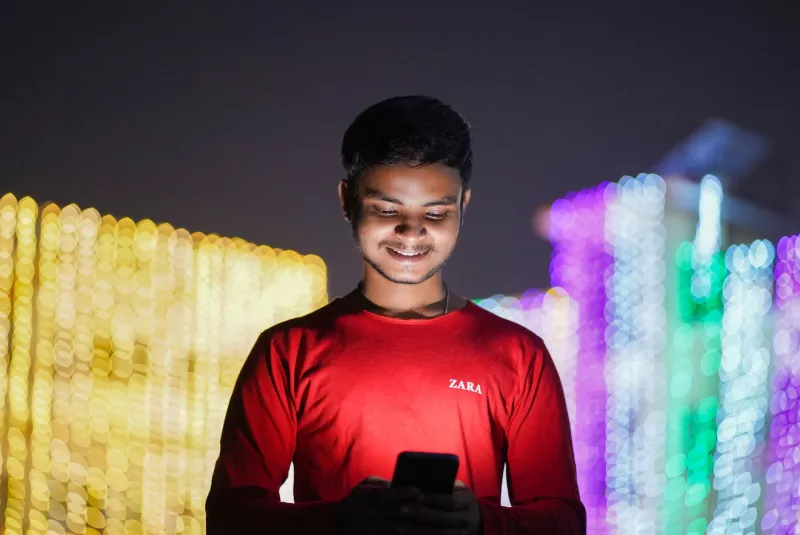
Consider the paradox at the heart of the modern art festival experience. You travel, sometimes hundreds of miles, to stand inside a work of art — to be surrounded by light and sound and intention, to feel something shift in the register of your attention. And then, almost before the sensation has had time to settle, you raise your phone and begin composing a frame.
The moment, in a very real sense, ends before it begins.
This is not a new observation. Cultural critics have been noting the corrosive effects of compulsive documentation since the smartphone became ubiquitous. But at immersive art festivals like Yuguang Art Festival — environments designed with extraordinary deliberateness to produce embodied, emotionally resonant experiences — the tension between presence and performance has taken on a particular urgency.
The Architecture of Distraction
Immersive light-based art is among the most demanding of all experiential formats. Artists who work in this idiom spend months, sometimes years, calibrating the relationship between luminosity, spatial movement, duration, and emotional effect. The work is not a backdrop. It is an environment with its own tempo, its own invitation to slow down.
When an attendee enters such a space with a phone already raised, they have made a choice — often unconsciously — to prioritize the image over the experience. The act of photography is not passive. It requires cognitive engagement: framing, exposure adjustment, caption composition. Each of these micro-decisions draws attention away from the phenomenological encounter the artist intended.
Research in cognitive psychology broadly supports what most of us already sense intuitively. The act of photographing an experience tends to reduce the depth of memory encoding, not enhance it. We trust the device to remember so that we don't have to — and in doing so, we allow the experience itself to pass largely unprocessed.
"There's a version of festival-going that is essentially content harvesting," observes one longtime attendee of immersive art events across the American Southwest. "You're moving through the space looking for shots, not looking at the work. By the end of the night you have two hundred photographs and almost no memory of actually being there."
The Social Pressure Dimension
What makes this pattern particularly difficult to interrupt is that it is not driven by pure self-interest. Much of the compulsion to document is social. Posting from a festival is a form of communication — it signals taste, presence, access. For younger attendees especially, the failure to document can feel like a kind of social omission, a refusal to participate in the shared language of the feed.
This dynamic creates a troubling feedback loop. The more people document, the more documentation becomes the norm. The more it becomes the norm, the more pressure each individual feels to participate. And the more they participate, the more the festival's experiential potential is collectively diminished.
Yuguang Art Festival has begun to engage with this challenge directly, not through prohibition — which tends to generate resentment and backlash — but through invitation. Designated unplugging hours during peak installation experiences, clearly marked contemplative zones where phones are gently discouraged, and programming that explicitly rewards sustained attention over brief encounter are all part of an evolving strategy to restore the primacy of presence.
What Intentional Viewing Actually Looks Like
For attendees who want to recalibrate their relationship with documentation, the shift does not require dramatic renunciation. It requires intention.
Several practical approaches have gained traction among festival communities across the country. One is the "one photograph" rule: upon entering an installation, allow yourself a single image, taken after you have spent at least five minutes simply looking. This approach preserves the documentary impulse without allowing it to colonize the entire encounter.
Another strategy involves a simple temporal inversion. Rather than photographing as a default and being present as an afterthought, experienced festival-goers are learning to be present first — to walk through an installation without the phone, to register what they notice, what they feel, what surprises them — and only afterward, on a second pass, to document selectively.
"The second pass is completely different," notes one Chicago-based attendee who adopted this practice after feeling persistently unsatisfied by festival experiences she had extensively photographed. "You're not discovering the work; you're revisiting it. You know what you want to capture because you already know what moved you."
The Memory You Actually Keep
There is a broader cultural conversation embedded in this particular tension, one that extends well beyond the festival grounds. American culture has become increasingly comfortable with the mediated version of experience — the photograph, the story, the reel — at the expense of the unmediated encounter. Festivals like Yuguang represent one of the few remaining contexts in contemporary public life where the invitation to simply be somewhere is extended with genuine force.
The light installations that define the Yuguang experience are built to do something to you, not simply to look good in a photograph. The artists behind them are working in a tradition that understands illumination as transformation — the kind that happens inside a person, not on a screen.
That transformation requires your full attention. It requires you to be, for at least a few moments, unreachable.
The feed will still be there when you come back. The experience, in its fullest form, exists only in the present tense.