Bright Spaces for Every Mind: How Yuguang Art Festival Is Building a More Inclusive Immersive Experience
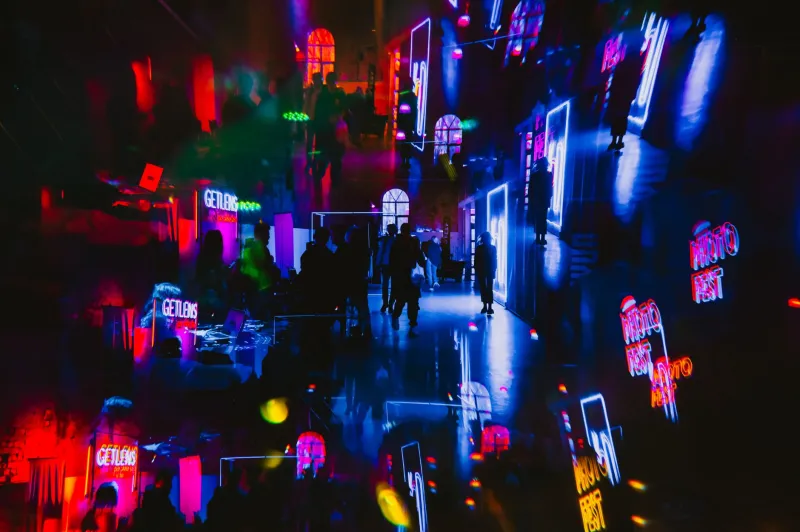
For most visitors, the hallmarks of an immersive art festival — cascading light projections, layered soundscapes, unexpected bursts of color and motion — are the very things that make the experience unforgettable. But for a significant portion of the American population, those same elements can render a festival not just uncomfortable, but entirely inaccessible.
Approximately one in five Americans lives with some form of neurodivergence, a broad category that includes autism spectrum disorder, attention-deficit/hyperactivity disorder (ADHD), sensory processing differences, and related conditions. For many in this community, the conventional festival environment — loud, densely crowded, visually overwhelming — has historically meant one thing: stay home.
Yuguang Art Festival is working to change that calculus entirely.
Rethinking the Festival from the Inside Out
The conversation around accessibility in the arts has long focused on physical barriers — wheelchair ramps, captioning, audio descriptions. Those efforts remain essential. But a quieter, equally urgent conversation has been gaining momentum: what does it mean to make immersive, multi-sensory art accessible to people whose nervous systems process the world differently?
At Yuguang, that question has moved from philosophical to practical. Festival organizers have spent considerable time consulting with disability advocates, occupational therapists, and neurodivergent community members to redesign aspects of the event experience from the ground up. The result is a layered approach to accessibility that goes well beyond a single checkbox on a planning document.
Sensory-friendly hours, offered during select morning sessions before peak crowds arrive, feature reduced sound levels across installations, dimmed or slowed light sequences, and clearly marked navigation paths that minimize unexpected sensory input. Visitors who attend these sessions receive a detailed sensory map of the festival grounds — a document that rates each installation on scales of auditory intensity, visual complexity, and crowd density, allowing attendees to plan their route with confidence rather than anxiety.
Quiet Zones as Creative Spaces
Perhaps the most visible of Yuguang's accessibility innovations is the introduction of dedicated quiet zones — designated areas scattered throughout the festival grounds where noise is actively managed, lighting is soft and static, and the pace of movement slows considerably. These are not afterthoughts tucked behind a service entrance. They are intentionally designed spaces, integrated into the festival's broader aesthetic.
"We wanted the quiet zones to feel like part of the art, not apart from it," explained one of the festival's lead experience designers in a recent planning session. "If a neurodivergent visitor needs to step away and decompress, that moment should still feel like it belongs to Yuguang."
The zones feature gentle ambient soundscapes, low-level lighting inspired by natural twilight, and seating that accommodates a range of sensory preferences — from firm, grounding chairs to softer options for visitors who seek proprioceptive comfort. Trained staff and volunteers stationed at each quiet zone have completed foundational neurodiversity awareness training, enabling them to offer support without inadvertently adding to sensory or social pressure.
Voices from the Community
The design decisions at Yuguang have not been made in isolation. Neurodivergent artists and attendees have been active participants in shaping what inclusion looks like at the festival.
One contributing artist, who creates large-scale light sculptures and identifies as autistic, described the significance of being involved in the process rather than simply being accommodated after the fact. "There's a difference between being tolerated and being centered," she noted. "When I was brought into the planning conversations, I could explain what actually helps — not what people assume helps. That distinction matters enormously."
Her own installation at the festival reflects that perspective directly. Visitors are invited to interact with the work at their own pace, with no time pressure and no prescribed path through the experience. Sound elements are layered but optional — a pair of headphones allows visitors to engage with the full audio dimension of the piece, while those who prefer silence can experience it as a purely visual work. The result is an installation that has resonated deeply with neurodivergent and neurotypical visitors alike.
Another attendee, a parent who brought her teenage son with ADHD to the festival for the first time last year, described the sensory map as a transformative tool. "We've avoided events like this for years because of the unpredictability," she said. "Having a map that told us exactly what to expect at each installation — the noise level, the crowd flow, whether there were strobing effects — meant we could actually plan. We stayed for four hours. That's never happened before."
The Universal Design Principle
What Yuguang's experience is demonstrating, in real time, is something that disability advocates and universal design researchers have long argued: when you build for the margins, you improve the experience for the center.
Sensory maps, for instance, have proven useful far beyond their original intended audience. Visitors with migraines, older attendees sensitive to loud environments, parents with young children, and anyone navigating the festival for the first time have all cited the maps as valuable tools. Quiet zones, similarly, have become popular rest points for a broad cross-section of visitors who simply appreciate a moment of calm within an otherwise stimulating environment.
Reduced-stimulation hours have attracted not only neurodivergent visitors but also elderly attendees, people recovering from illness, and individuals who simply prefer a less crowded experience. In designing for one community's specific needs, the festival has inadvertently — or perhaps quite deliberately — raised the floor for everyone.
What Comes Next
Yuguang's work in this area is ongoing. Plans for future festivals include expanded partnerships with neurodiversity advocacy organizations, the development of pre-visit virtual walkthroughs that allow visitors to familiarize themselves with installations before arriving, and the creation of a formal advisory council composed of neurodivergent community members who will have a standing voice in festival design decisions.
There is also a broader conversation underway about how the festival's commissioning process can actively invite neurodivergent artists to bring their perspectives to the work itself — not merely as consultants on the margins of the experience, but as central creative voices shaping what Yuguang looks, sounds, and feels like.
The ambition, ultimately, is not simply to accommodate neurodivergent visitors within a festival built for someone else. It is to build a festival that reflects the full range of human perception — one where the diversity of how people experience the world is not a logistical challenge to be managed, but a creative resource to be celebrated.
Where light meets art and culture comes alive, there is room for every mind. Yuguang Art Festival is committed to making that promise real.