Designing for Everyone: How Yuguang Art Festival Is Redefining Who Immersive Art Belongs To
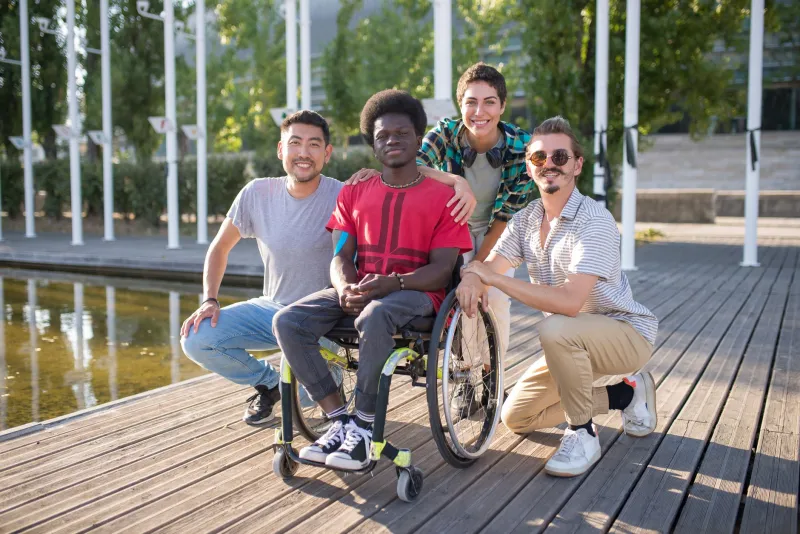
For most of its history, immersive art has carried an unspoken assumption: that the ideal visitor arrives without friction. They walk without difficulty, process sensory input without distress, navigate English-language signage without pause, and move through crowded corridors without anxiety. Yuguang Art Festival has spent the past several years dismantling that assumption—not as a compliance exercise, but as a creative one.
"Accessibility isn't a ramp bolted onto the side of a building," says Dr. Miriam Osei, an independent accessibility consultant who has worked with Yuguang's curatorial team for the past two festival cycles. "It's a question you ask at the beginning of the design process, not the end. And when you ask it early enough, it changes what the art itself becomes."
That philosophy is increasingly visible—and audible, and tangible—across the festival grounds.
From Afterthought to Architecture
When Yuguang's production team began engaging accessibility consultants in the early planning stages, the conversations quickly moved beyond ramp gradients and accessible parking. Artists were asked to consider how their installations would be experienced by visitors in wheelchairs, by those who are Deaf or hard of hearing, and by individuals with low vision or light sensitivity.
The outcomes were sometimes unexpected. One large-scale light installation, originally conceived as a purely visual experience, was redesigned to incorporate vibrotactile floor panels—surfaces that translate the rhythm of the accompanying soundscape into physical sensation. What began as an accommodation for Deaf visitors became, according to multiple attendees, one of the most emotionally resonant elements of the piece for sighted and hearing visitors as well.
"It grounded you," recalls festival-goer Diane Castellano of Portland, Oregon, who attended last year's festival with her teenage daughter, who is Deaf. "We experienced it together in a way I didn't expect. The floor was speaking to both of us."
This phenomenon—where inclusive design enhances the experience for all visitors—is sometimes called the "curb cut effect," a reference to the sidewalk ramps originally built for wheelchair users that turned out to benefit cyclists, parents with strollers, and delivery workers alike. At Yuguang, it has become something of a guiding principle.
Quiet Spaces and Sensory Consideration
Among the festival's most discussed innovations is its network of designated quiet zones—low-stimulation areas positioned throughout the grounds where visitors can decompress away from the intensity of the main installations. These spaces were developed in direct consultation with neurodivergent attendees and advocacy organizations representing people with autism spectrum conditions, sensory processing differences, and anxiety disorders.
The zones are not merely empty rooms. They are considered environments: softly lit, furnished with comfortable seating, and equipped with noise-dampening materials. Festival staff assigned to these areas receive specific training in trauma-informed communication and sensory support.
"There's a narrative in American culture that if you can't handle the crowd, the noise, the lights, then maybe a festival just isn't for you," says Marcus Tran, a Chicago-based disability advocate who assisted in developing Yuguang's sensory guidelines. "Yuguang is challenging that. They're saying: we want you here. We built this with you in mind."
The response has been significant. Festival data from recent years indicates that quiet zone usage is highest not during the most intense installations, but in the hour immediately following them—suggesting that visitors are using the spaces as part of a deliberate cycle of engagement and recovery rather than as an exit from the experience.
Language, Legibility, and Cultural Access
Physical accessibility is only one dimension of inclusion. Yuguang has also invested meaningfully in multilingual curation, recognizing that the United States is home to tens of millions of residents for whom English is not a primary language.
Artist statements, wayfinding materials, and programming guides are now available in Spanish, Mandarin, Vietnamese, and American Sign Language (ASL), with additional languages added on a rolling basis based on community demographics in the regions where the festival travels. ASL-interpreted tours are offered on multiple evenings throughout the festival run, and select artist talks are simultaneously interpreted.
"Art should not require fluency in a particular language to be felt," says festival curator Alicia Fontaine. "But the context around art—the story of how it was made, what the artist intended, what questions it is asking—that context matters. We want every visitor to have access to that layer of meaning."
For Yuki Nakamura, a Japanese-American visitor from the San Francisco Bay Area who attended with her elderly parents, the Mandarin-language materials were a turning point. "My parents have always felt a little peripheral at American arts events," she says. "This was the first time I watched them read something at an exhibition and then talk to each other about it. They had opinions. They were participating."
The Artists' Perspective
Not all artists initially embraced the expanded design briefs that Yuguang's inclusive framework introduced. Some expressed concern that accessibility requirements would compromise their creative vision. What many discovered, however, was the opposite.
Sculptor and installation artist Jerome Whitfield, whose work has appeared in two Yuguang exhibitions, describes the process of adapting a large-scale kinetic light piece for visitors with photosensitive epilepsy as one of the most technically demanding—and ultimately rewarding—challenges of his career.
"I had to understand my own work differently," he says. "What was the piece actually doing? What was essential to its meaning, and what was just habit? The constraints forced me to ask better questions. The final version was more precise. It knew what it was."
Whitfield now incorporates accessibility review into his studio practice as a standard step, independent of any festival requirements. "It changed how I think about audience," he says simply.
A Festival That Reflects Its Community
The United States is home to an estimated 61 million adults living with some form of disability, according to the Centers for Disease Control and Prevention. That figure does not account for the millions more who identify as neurodivergent, or for the elderly visitors whose needs are not always categorized under the disability umbrella but are no less real.
For Yuguang, the implications are straightforward: a festival that does not design for these visitors is a festival that excludes a substantial portion of its potential community. But the argument the festival increasingly makes is not merely demographic. It is artistic.
"When you design for the full range of human experience," says Dr. Osei, "you make work that speaks to the full range of human experience. You stop making art for a narrow idea of who a person is, and you start making art for people as they actually are."
That ambition—to meet visitors where they are, in the full complexity of their bodies and minds—may be the most radical thing Yuguang Art Festival is doing. Not because it is technically difficult, though it often is. But because it asks artists, curators, and festival organizers to continually expand their understanding of what it means to create an experience that is genuinely for everyone.
Light, by its nature, reaches everywhere. Yuguang is working to ensure the art it illuminates does the same.