Captured in Light: How Gen Z Is Rewriting the Rules of Festival Participation
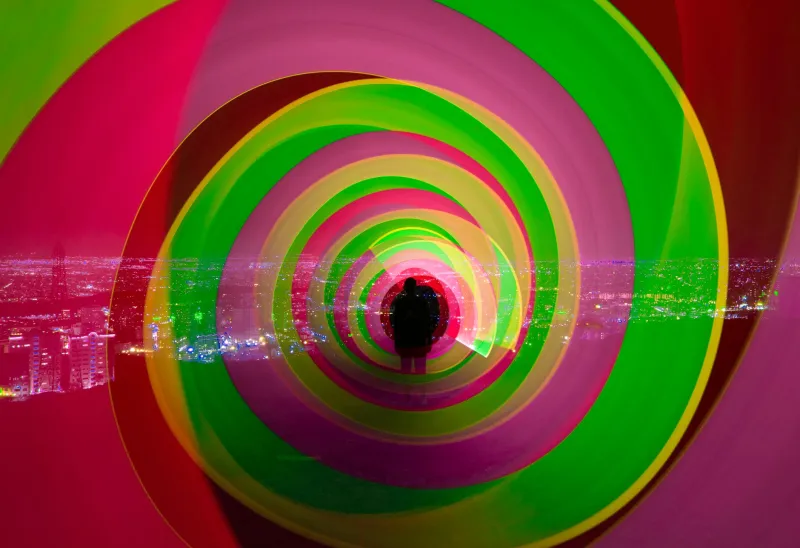
There is a moment that festival organizers have come to recognize — and quietly design for — when a visitor stops walking, raises a phone, and frames a shot that will reach hundreds or thousands of people within minutes. For the Yuguang Art Festival, where light itself is the primary medium, that moment is not an afterthought. It is, increasingly, a core part of the artistic and communal experience.
Gen Z, broadly defined as those born between the late 1990s and the early 2010s, has grown up in an environment where the boundary between experiencing something and sharing it is essentially nonexistent. For this cohort, documentation is not a distraction from presence — it is a form of presence. And their expectations of what an art festival should offer, both aesthetically and communally, are reshaping how events are conceived, staged, and evaluated.
Authenticity Over Spectacle
It would be tempting to reduce Gen Z's relationship with festival culture to a simple appetite for Instagrammable moments — visually arresting backdrops engineered for social media performance. That reading, while not entirely wrong, misses something more nuanced.
Speaking with younger attendees at festivals across the country, a more complex picture emerges. Yes, visual impact matters. But Gen Z audiences demonstrate a sophisticated ability to distinguish between environments that are genuinely immersive and those that feel manufactured for the camera. The former earns their engagement and their advocacy. The latter earns their skepticism — and occasionally, their mockery.
"You can tell when something was designed to be photographed versus designed to be felt," says Maya, a 22-year-old design student who attended a major light arts festival in the Pacific Northwest last year. "When it's just a backdrop, it feels hollow. When the art actually makes you feel something, the photo becomes a way of trying to hold onto that feeling."
This distinction has significant implications for festivals like Yuguang, whose investment in emotionally resonant, rigorously conceived light-based art positions it well to meet the authenticity standard that younger audiences apply.
Co-Creation as Expectation
Beyond consumption and documentation, Gen Z brings a participatory expectation to cultural events that older festival formats were not designed to accommodate. This generation came of age in an era of user-generated content, collaborative online communities, and platforms that reward creative contribution. Passive spectatorship, for many of them, simply does not feel like enough.
Festivals that have successfully engaged younger audiences in recent years share a common thread: they offer meaningful opportunities for visitor participation in the creative process. This does not necessarily mean open-ended chaos. It means structured, intentional invitations for attendees to contribute something of themselves to the experience.
At Yuguang, interactive installations that respond to visitor movement, sound, or input have consistently generated the deepest engagement among younger attendees. When a visitor's presence literally changes the light — when the art responds to them — the experience becomes something they helped create rather than something they merely witnessed.
"That's the difference between a museum and a festival, or it should be," says Jordan, a 24-year-old content creator from Chicago who has attended multiple large-scale arts events. "A museum is something that exists without you. A festival should feel like it's different because you're there."
The Social Layer as Cultural Infrastructure
For Gen Z, social media is not a supplement to the festival experience — it is a parallel layer of that experience, running simultaneously and feeding back into the physical event in real time. When a particular installation begins trending on TikTok or appears repeatedly in Instagram Stories, it generates lines of visitors who have seen it digitally and want to encounter it in person. The social layer amplifies, directs, and in some cases creates the cultural significance of individual works.
Festival organizers who understand this dynamic work with it rather than against it. Thoughtful hashtag strategies, artist collaborations with creators who have established Gen Z followings, and the deliberate placement of visually distinctive works in high-traffic areas all reflect an awareness that the social media audience is as real and as important as the on-site crowd.
But there are limits to how explicitly this can be engineered. Gen Z audiences are adept at identifying content that has been optimized for virality over artistic integrity, and they respond to it accordingly. The most effective strategy, as several festival marketers have noted, is simply to make the art extraordinary — and then make it easy to share.
Community Beyond the Weekend
Perhaps the most underappreciated aspect of Gen Z's relationship with festival culture is their tendency to form lasting communities around shared aesthetic experiences. Online groups, Discord servers, and social media followings built around specific festivals maintain active engagement between events, sustaining enthusiasm and building anticipation across the calendar year.
For a festival like Yuguang, whose brand identity centers on the intersection of light, art, and living culture, this community-building potential is significant. A Gen Z attendee who has a genuinely transformative experience at the festival is not merely a one-time visitor — they are a potential long-term advocate, a content creator, and a community anchor who brings others into the fold.
"I've made actual friends through festival communities online," says Priya, a 21-year-old from Austin who discovered her interest in light art through social media before attending her first immersive festival. "People who care about the same things. That's not nothing. That's actually the whole point."
Designing for the Next Generation
The festivals that will define American cultural life in the coming decade are, in many ways, being designed right now — and the most forward-thinking of them are being designed with Gen Z not as an audience to be reached but as a community to be built.
At the Yuguang Art Festival, where the guiding ethos is that light and art together can bring culture to life, this orientation toward participatory, authentic, socially connected experience is not a strategic pivot. It is, at its core, what the festival has always been about: creating conditions in which something genuine can happen between art and the people who encounter it.
The phones raised in the glow of a Yuguang installation are not a distraction from that mission. For the generation holding them, they are evidence of it.