Light Without Gatekeepers: How Yuguang Is Rewriting Who Gets to Be an American Artist
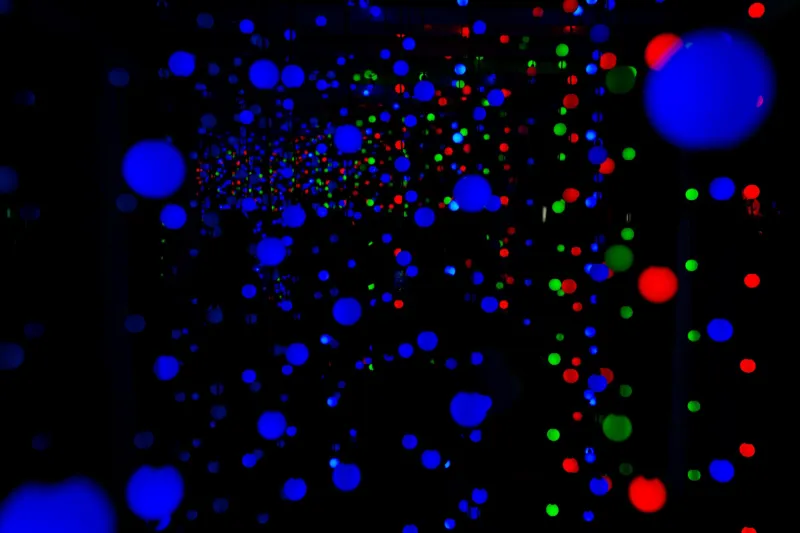
For generations, access to the American art world has been filtered through institutions whose selection processes often reflected the biases of their founders. Yuguang Art Festival has emerged as a meaningful counterforce—a platform where BIPOC artists, disabled creators, and rural innovators find visibility that traditional galleries and museums have too frequently withheld. The stories of those who have passed through Yuguang's stage reveal something important about the future of art in this country.
The Weight of the Threshold
Ask any artist who has navigated the traditional gallery system in the United States, and a familiar pattern emerges. The submission process favors those with institutional connections. The selection process rewards work that conforms to established aesthetic expectations. The pricing and presentation structures of commercial galleries place them beyond the reach of artists who lack either personal wealth or the backing of a well-resourced arts organization.
For artists from communities historically underrepresented in mainstream art institutions—Black, Indigenous, and other artists of color; disabled artists; creators working in rural or economically marginalized areas—these barriers are not merely inconvenient. They are, in many cases, insurmountable.
"I spent years sending applications to residencies and gallery open calls," says Tomás Reyes, a multidisciplinary artist of Mexican and Navajo heritage whose large-scale light sculpture debuted at Yuguang three years ago. "I got a lot of polite rejections and a lot of silence. What I never got was a real conversation about my work. Yuguang was the first time anyone in the professional art world treated my practice as genuinely worthy of engagement."
Reyes's experience is not exceptional. It is, for many artists whose backgrounds fall outside the narrow demographic profile that has historically dominated American art institutions, distressingly ordinary.
A Different Kind of Selection
Yuguang's approach to artist selection has been shaped, in part, by an explicit commitment to representing the full breadth of American creative life. The festival's programming team actively solicits proposals from artists in underserved communities, partners with organizations that support BIPOC and disabled creators, and maintains a submission process designed to minimize the advantages that accrue to those with institutional affiliations.
This does not mean that merit is subordinated to representation. It means, rather, that the festival operates from the premise that talent is equitably distributed across the American population while opportunity is not—and that correcting for that inequity is a legitimate and necessary function of a major cultural platform.
"We are not doing anyone a favor by including their work," says a member of the festival's programming advisory group. "We are doing ourselves a favor. When we expand our field of consideration, we find extraordinary things that we would otherwise have missed entirely. The festival is richer for it. The audience is richer for it."
Visibility as Transformation
For artists who have participated in Yuguang after years of institutional exclusion, the experience is frequently described in terms that go beyond professional opportunity. It is, many report, a form of validation that reconfigures their relationship to their own creative identity.
Jasmine Okafor, a visual artist and community organizer from the Mississippi Delta, created an immersive installation for Yuguang that drew on the visual vocabulary of her grandmother's quilting tradition and the digital aesthetics of contemporary light art. The work attracted significant critical attention and led directly to her first solo exhibition at a major metropolitan arts center.
"Before Yuguang, I was making work for my community and for myself," Okafor reflects. "After Yuguang, I was making work for the world. That's not a small thing. That's a complete reorientation of what feels possible."
Her trajectory—from community-based practice to national visibility, with Yuguang as the inflection point—has been replicated by a number of artists whose backgrounds placed them outside the traditional pathways to recognition.
Access as Architecture
Yuguang's commitment to inclusivity extends beyond the selection of artists to the design of the festival experience itself. The festival has invested significantly in physical accessibility—ensuring that installations are navigable for visitors and participants with mobility differences—and has worked to create submission and participation processes that do not inadvertently disadvantage artists with disabilities.
For artists like Daria Whitfield, a deaf sculptor and installation artist based in rural Tennessee, these structural considerations are not peripheral to the festival's mission. They are its mission.
"A lot of festivals say they welcome disabled artists, and then they put the application on a platform that doesn't work with screen readers, or they hold the orientation meeting without an interpreter," Whitfield says with characteristic directness. "Yuguang has made mistakes too, but they fix them. They ask. They listen. That's not nothing—that's actually quite rare."
Whitfield's installation at last year's festival—a tactile light work designed to be experienced through touch as well as sight—was among the most discussed pieces of the entire program, drawing visitors who had never before encountered art designed with sensory accessibility as a primary value.
What the Future Looks Like
The broader significance of Yuguang's accessibility model lies not only in what it offers to individual artists but in what it demonstrates to the American art world as a whole. Festivals and institutions across the country are watching the Yuguang experiment with interest, and some are beginning to adapt their own practices in response.
The argument being made—implicitly, through programming decisions, and explicitly, through the festival's public statements—is that the gatekeeping function of traditional art institutions has not served American culture well. It has produced a canon that is narrower, less vital, and less representative of the nation's actual creative life than it should be.
Yuguang does not claim to have solved the problem of institutional exclusion in American art. But it has offered a compelling demonstration of what becomes possible when the gates are opened wider. The light that enters, it turns out, illuminates far more than anyone expected.