The Art of the Invisible Hand: How Yuguang's Curators Orchestrate Wonder
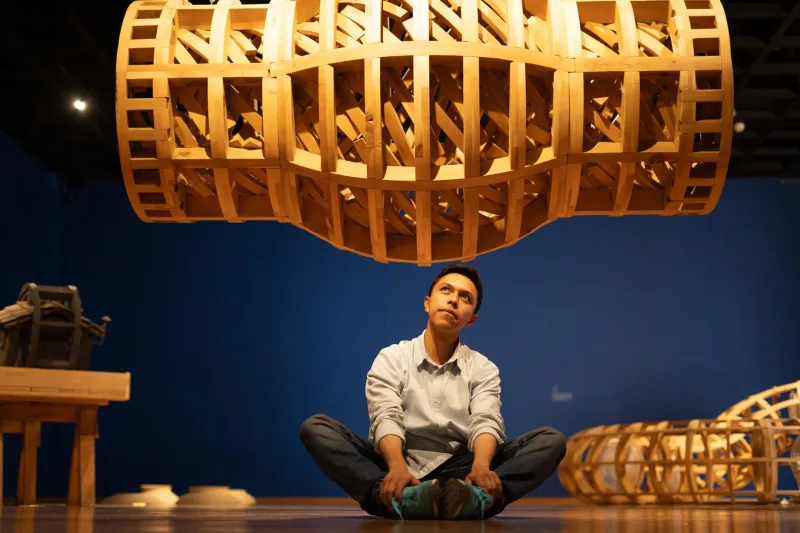
Long before a single visitor steps onto the festival grounds, a team of curators has already walked every path, debated every sightline, and mapped every emotional beat of the journey ahead. At Yuguang Art Festival, curation is not merely selection—it is composition, psychology, and choreography practiced at the scale of an entire landscape. This is a rare look inside the conversations that shape what you feel, before you even know you're feeling it.
The First Question Is Never About Art
It might surprise those outside the curatorial process to learn that the first question Yuguang's programming team asks when evaluating a potential installation is not about aesthetic merit. It is about movement.
"We ask: where does this piece want to live?" explains one member of the curatorial team, who has worked on the festival's programming for several years. "Not in an abstract sense, but literally—what kind of space does it require, what does it do to the people around it, and how does it change the energy of everything nearby? An installation that might be extraordinary in isolation can become overwhelming or even deadening if it's placed next to another work of similar intensity."
This spatial sensitivity is fundamental to Yuguang's approach. The festival grounds are not treated as a neutral container into which artworks are placed. They are understood as a dynamic environment in which each element—topography, ambient sound, natural light, foot traffic patterns—interacts with every installation to produce an experience that is greater, or lesser, than the sum of its parts.
Sequencing as Storytelling
Yuguang's curatorial team speaks frequently about the festival experience as a narrative arc. Just as a skilled novelist manages the emotional temperature of a story—building tension, providing relief, delivering revelation at precisely the right moment—the curation team sequences installations to produce a coherent emotional journey.
"We think about rhythm constantly," says another team member. "If you have three high-intensity, immersive experiences in a row, visitors become saturated. They stop feeling. So we deliberately place quieter, more contemplative works between major installations. Those transitional moments are not fillers—they're essential. They're the spaces where the previous experience can settle and the next one can be anticipated."
This approach draws on established principles of environmental psychology and audience experience design, but at Yuguang it is practiced with a degree of intentionality that goes beyond most festival contexts. The team conducts extensive walk-throughs during the installation phase, adjusting placement and orientation based on real-time observations of how the space feels to move through.
The Sightline Problem
One of the most technically demanding aspects of large-scale festival curation is the management of sightlines. At Yuguang, where many installations are luminous and visually commanding, the risk of premature visual disclosure—seeing a major work before the curator intends for you to see it—is a constant challenge.
"Discovery is everything," explains a senior programming advisor affiliated with the festival. "The moment when a visitor rounds a corner and encounters something unexpected is one of the most powerful experiences we can offer. If they've already seen it from two hundred yards away, that moment is gone. We spend enormous amounts of time thinking about how to protect those revelatory instants."
This involves careful consideration of screening elements—natural plantings, temporary architectural structures, the strategic placement of smaller works that draw the eye without revealing what lies beyond. It also requires ongoing negotiation with artists, some of whom understandably want their work to be visible from as great a distance as possible. The curatorial team's role in these conversations is diplomatic as much as aesthetic.
When the Conversation Gets Difficult
Not every curatorial decision is made harmoniously. The selection process involves hundreds of proposals, and the rejection rate is high. Artists whose work is not selected sometimes feel that the process lacks transparency. Those whose work is accepted sometimes find that the placement or contextual framing differs from what they envisioned.
"We are always in dialogue," says a curatorial team member. "But dialogue does not mean consensus on every point. We have a responsibility to the overall experience of the festival, and that sometimes means making decisions that individual artists find disappointing. We try to be honest about our reasoning, and we try to ensure that every artist whose work appears at Yuguang feels genuinely respected, even when we've made choices they wouldn't have made themselves."
This tension—between the autonomy of individual artists and the integrity of the collective experience—is, in many ways, the defining challenge of festival curation. It is a challenge that has no permanent resolution, only ongoing, good-faith negotiation.
Designing for the Unscripted Moment
For all the deliberate planning that goes into Yuguang's programming, the curatorial team is equally attentive to the unscripted moments that no amount of advance preparation can fully anticipate. A sudden change in weather can transform the quality of light across an entire installation field. An unexpected crowd formation can create its own accidental choreography. Children interact with works in ways that their creators never imagined.
"Some of our most beloved festival moments have been complete accidents," admits one team member with evident affection. "We plan obsessively, and then we leave room for the festival to surprise us. That balance—between control and openness—is maybe the truest expression of what curation actually is."
At Yuguang, the curators' greatest achievement may be this: creating conditions in which wonder feels inevitable, while ensuring that every instance of it feels entirely spontaneous.