Returning to the Source: How Festival Stages Help Artists Rediscover Why They Create
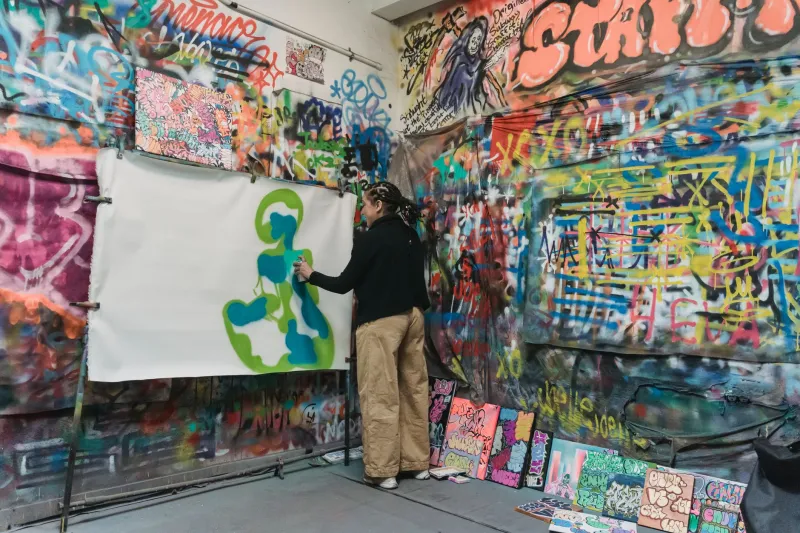
There is a particular kind of exhaustion that does not appear in any medical manual but that working artists recognize immediately when they encounter it. It is not physical fatigue, though it can feel like that. It is not depression, though it shares some of depression's texture. It is the slow accumulation of distance between the person who makes art and the reason they started making it — a gap widened incrementally by deadlines, market expectations, critical attention, and the relentless pressure to produce work that is legible, saleable, and consistent with an established identity.
In the creative industries, this condition goes by a name that has become almost too familiar: burnout. But for visual artists, installation makers, and light-based practitioners, the phenomenon has a specific character. It is less about exhaustion and more about estrangement — from the work, from the process, and most painfully, from the original curiosity that made the work feel necessary.
A growing number of established and mid-career artists have begun to describe the Yuguang Art Festival as something more than a professional engagement. For them, it functions as a creative sanctuary — a place where the structures that typically govern artistic production are temporarily suspended, and something older and more essential can reassert itself.
The Weight of a Known Name
Success in the art world carries its own burdens. Once an artist has developed a recognizable body of work, a signature approach, or a market-legible identity, the pressure to remain consistent with that identity can become its own form of constraint. Collectors expect continuity. Galleries need to position new work in relation to established work. Critics evaluate each piece against the artist's prior output. The creative act, which once felt like an act of discovery, begins to feel like an act of maintenance.
Marco Delgado, a light sculptor based in Chicago who has shown work at Yuguang for three consecutive years, describes this dynamic with characteristic directness. "At a certain point, I was making work that looked like my work," he says. "It had my fingerprints on it, my formal vocabulary. But I wasn't discovering anything. I was executing."
Delgado's experience is not unusual. For many artists who have achieved a degree of professional stability, the gallery system — for all its benefits — can inadvertently calcify creative practice. The feedback loops are long, the stakes are high, and the cost of experimentation, in both financial and reputational terms, can feel prohibitive.
What the Festival Structure Actually Permits
The Yuguang Art Festival operates on a fundamentally different logic than the commercial art world, and that difference has practical consequences for the artists who participate in it. Festival installations are temporary by definition. They will be dismantled. They will not be acquired by collectors. They will not be reviewed in the same terms as gallery work. This impermanence, which might seem like a limitation, functions for many artists as a form of liberation.
When work does not need to endure, it does not need to be perfect. When it will not be sold, it does not need to be legible to a market. When it exists in a collaborative environment alongside dozens of other artists working simultaneously, the competitive isolation of studio practice gives way to something more porous and generative.
Lena Vasquez, a multidisciplinary artist from Brooklyn whose commercial practice centers on large-format photography, created her first interactive light installation at Yuguang two years ago. "I hadn't worked with light as a primary material before," she recalls. "In my regular practice, I would never have taken that risk. But at the festival, the worst that could happen was that it didn't work, and somehow that felt fine. More than fine. It felt like being twenty-three again."
The comparison to an earlier, less encumbered version of creative selfhood appears repeatedly in conversations with festival artists. What they are describing is not regression but recovery — a return to the experimental disposition that professional success had gradually trained them away from.
Collaboration as Antidote
One of the structural features of the Yuguang Art Festival that artists consistently identify as transformative is its emphasis on collaborative process. Unlike the solitary conditions of most studio practice, the festival brings artists into sustained proximity with one another during the installation and production phases. Ideas are exchanged informally. Technical problems become shared problems. The boundary between one artist's work and another's begins to soften in productive ways.
For artists who have spent years working in relative isolation — as most professional artists do — this collective environment can feel almost disorienting at first. "I didn't realize how lonely my practice had become until I wasn't," says James Okafor, a sound and light artist from Atlanta who has participated in Yuguang's collaborative residency program. "You forget that art can be a conversation. Not a finished statement, but an actual back-and-forth."
This collaborative dimension also has a specific effect on the commercialization pressures that many artists cite as a primary source of creative burnout. When work is made collectively, it resists the logic of individual authorship that the art market depends upon. The work belongs, in some meaningful sense, to the moment and the place rather than to a name or a brand. That shift in ownership — even when it is temporary — can be profoundly clarifying.
Joy as a Disciplined Practice
The word that comes up most often in conversations with festival artists is not "freedom" or "experimentation" or even "collaboration." It is "joy" — a word that can sound almost embarrassingly simple in the context of a serious artistic practice, but that carries real weight when spoken by people who have spent years without it.
Reclaiming joy in creative work is not, these artists insist, a retreat from seriousness. It is, in fact, the opposite. An artist working from genuine curiosity and delight produces work with a different quality of attention than one working from obligation or market calculation. The difference is audible in music, visible in painting, and palpable in the kind of immersive installation work that defines the Yuguang experience.
At its best, the festival functions as a reminder that the conditions under which art is made are not incidental to the art itself. When those conditions include permission to fail, space for genuine surprise, and the company of other people who have chosen to show up fully, something changes in the work. It becomes, once again, an act of discovery rather than execution.
For the artists who return to Yuguang year after year — not because they must, but because they need to — that distinction is everything.