Seeds of Light: How a Single Visit to Yuguang Is Growing Into Community Art Movements Across America
The evening Carla Mendez drove home from Yuguang Art Festival, she barely spoke. Her husband, accustomed to her post-event debriefs, left her to her thoughts. She stared out the passenger window at the highway lights of rural Tennessee and turned over the same question for four hours straight: Why doesn't our town have anything like that?
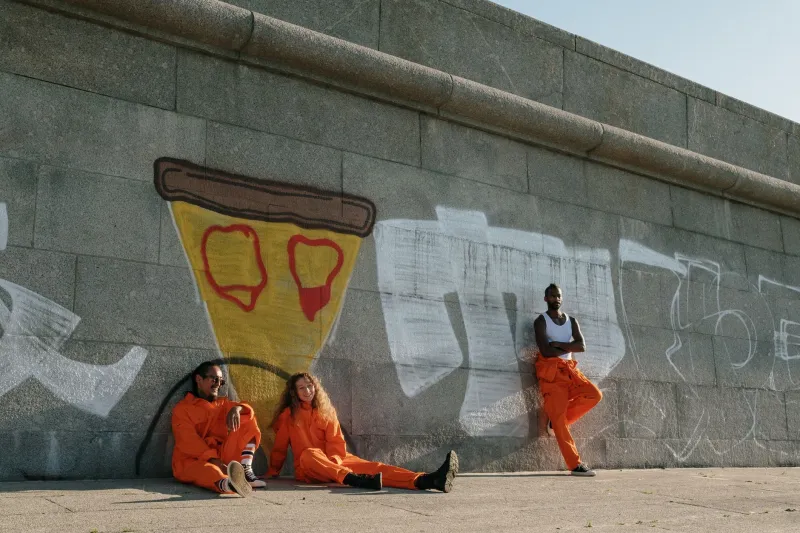
Twelve months later, the answer is visible on the walls of downtown Cookeville. A rotating series of large-scale murals now covers eight formerly blank building facades, organized by a nonprofit Mendez founded the winter after the festival. The project has drawn artists from across the state, generated modest but meaningful tourism, and — perhaps most significantly — given local teenagers a reason to take pride in a downtown they had largely written off.
"I didn't come home with a plan," Mendez says. "I came home with a feeling. The plan came later."
The Anatomy of Inspiration
Mendez's story is not unique. Across the United States, a pattern has emerged in the wake of Yuguang Art Festival: attendees return to their communities carrying something that resists easy description — a heightened sense of what art can do, what public space can feel like, what a community can become when it invests in creative experience. And a surprising number of them do something about it.
This phenomenon is difficult to quantify with precision, but its contours are becoming increasingly visible. Festival organizers, who have tracked attendee origins for several years, have begun noticing clusters of community art activity in cities and towns with high attendance concentrations. The correlation is not perfect — many factors shape local cultural development — but the directional signal is consistent enough to warrant attention.
"We started hearing these stories informally at first," says a member of Yuguang's community engagement team. "Someone would email us a photo of a project they'd launched and say, 'This started at your festival.' After the third or fourth time, we realized this was something we should be paying attention to."
From Festival Visitor to Community Catalyst
The projects that emerge from these post-festival impulses vary enormously in scale, medium, and context. In Youngstown, Ohio, a former steel worker who attended the festival with his daughter launched a series of light-projection events in a vacant industrial lot, drawing hundreds of residents to a space that had been associated for years with blight and neglect. In Albuquerque, New Mexico, a high school art teacher returned from the festival and redesigned her curriculum around immersive and site-specific work, eventually expanding the program into an after-school collective that now operates independently.
In Asheville, North Carolina — already a city with a robust arts culture — a festival visitor named Devon Park used the experience as the catalyst for something more structurally ambitious: a community land trust dedicated to preserving affordable studio space for working artists facing displacement by rising real estate costs.
"Yuguang showed me what was possible at scale," Park explains. "Not just aesthetically — organizationally. Watching how they had coordinated dozens of artists, hundreds of volunteers, and thousands of visitors, all in service of a shared creative vision, made me think: that kind of coordination is learnable. It's not magic. It's just sustained commitment."
The Economic Dimension
The cultural impact of these grassroots initiatives is the most visible dimension of their legacy, but it is not the only one. Several of the community projects traced back to Yuguang attendance have generated measurable economic activity in their home communities — activity that researchers of the creative economy would recognize as part of a well-documented pattern.
Public art generates foot traffic. Foot traffic supports local retail. Cultural events attract visitors from outside the community who spend money on lodging, food, and transportation. Artists who relocate to areas with active creative communities bring spending power and professional networks. The multiplier effects are real, if sometimes modest in scale.
In Cookeville, Mendez estimates that the mural project has contributed to a 15 percent increase in foot traffic to the three-block stretch of downtown where most of the works are concentrated, based on informal counts conducted with the local chamber of commerce. Two new restaurants and a gallery-café have opened in the area since the project launched. Whether the murals were the cause, a contributing factor, or simply coincident with broader trends is impossible to determine with certainty. But local business owners are not particularly interested in debating causation.
"I don't know if it was the art or the economy or just time," says one downtown shop owner. "What I know is that people are coming downtown again, and they're staying longer. Something changed."
What Yuguang Gives That Other Festivals Don't
Not every art festival produces this kind of downstream civic energy, and it is worth asking what distinguishes Yuguang's effect from that of comparable events. Several of the community organizers interviewed for this piece offered a consistent answer: the festival does not merely show visitors what art looks like. It shows them what art does.
The immersive, participatory nature of the Yuguang experience places visitors inside the work rather than in front of it. They do not observe a creative vision; they inhabit one. That distinction, many report, changes the nature of the inspiration they carry home. It is not the inspiration of the passive admirer who wishes they could create something beautiful. It is the inspiration of someone who has already, in some small but genuine sense, participated in creation.
"I didn't leave thinking, 'I wish I could do that,'" says Devon Park. "I left thinking, 'I just did something. Now I want to do more.'"
Nurturing the Ripple
Yuguang's community engagement team has begun exploring ways to support the grassroots initiatives that emerge from the festival's alumni network — not by directing or funding them, but by connecting them to each other. An informal network of festival-inspired community projects is taking shape, sharing resources, strategies, and encouragement across geographic and demographic lines.
The festival's role in that network is deliberately light. These projects belong to their communities, not to the event that sparked them. But the connection is real, and the recognition that Yuguang occupies a place at the beginning of these stories — not the end — is shaping how the festival thinks about its own purpose and reach.
Light, by its nature, does not stay where it originates. It travels, reflects, and finds its way into spaces its source could never have anticipated. The community art movements growing in Yuguang's wake are evidence that the same is true of the creative energy the festival generates — and that the most important thing a festival can do may be to give that energy somewhere worth going.