Beyond What the Eye Can See: How Sound Design Completes the Immersive Art Experience
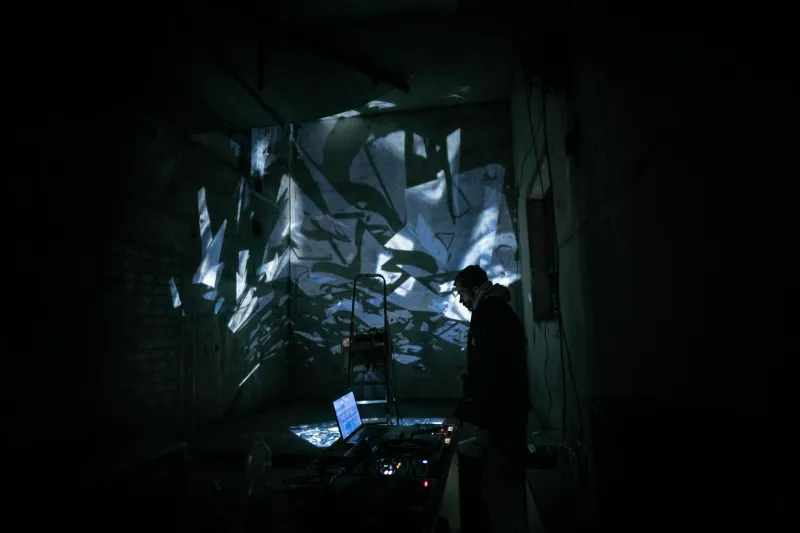
When visitors step into a large-scale light installation, their first instinct is almost always to look. The luminous forms, the shifting colors, the choreographed pulses of brilliance — all of it commands attention with an authority that visual art has always possessed. Yet seasoned festival-goers often report that the experiences they carry home longest are not the ones they merely saw. They are the ones they felt in the chest, the ones that seemed to breathe alongside them, the ones that made the air itself feel different. More often than not, sound is the reason.
At the Yuguang Art Festival, where the intersection of light and human experience is a founding principle, the role of audio has evolved from background accompaniment into a discipline as rigorous and intentional as sculpture or cinematography. Behind every resonant installation is a layered conversation between the visual artist and a sound designer — a conversation that most visitors never hear about, even as they benefit from it profoundly.
The Architecture of Listening
Spatial audio — the practice of placing sound in three-dimensional space rather than projecting it from fixed speakers — has transformed what is technically possible in outdoor and large-venue festival settings. Unlike stereo or even standard surround sound, spatial audio systems can make a single tone appear to rise from the ground beneath your feet, travel in a slow arc overhead, and dissolve behind you. When synchronized with a visual installation, the effect is not merely additive. It is multiplicative.
"People think about immersion as a visual problem," says one sound engineer who has worked on multi-sensory installations across the American festival circuit. "But the ear is always processing faster than the eye. Sound tells the brain where it is in space before vision has a chance to confirm it. If the audio and the visuals are working together, the brain accepts the whole environment as real. That's when you stop being an observer and start being a participant."
This neurological reality is not incidental. Researchers studying multisensory perception have documented what is known as the McGurk effect and related cross-modal phenomena — instances in which the brain resolves conflicting sensory information by favoring whichever input arrives with the greatest contextual coherence. In practice, this means that a precisely designed soundscape can alter how a visitor perceives the color, scale, and emotional register of a visual work. Low-frequency drones, for instance, have been shown to evoke feelings of unease or awe independent of any visual stimulus. When paired with an installation built around deep indigo light and slow movement, those same frequencies deepen the emotional response in ways that neither element could achieve independently.
Composition as Collaboration
For composers working in the festival context, the challenge is fundamentally different from scoring a film or recording an album. There is no fixed viewing position, no single timeline, no guaranteed sequence of experience. A visitor might spend forty seconds near the edge of an installation and eight minutes at its center. The composition must remain coherent and emotionally resonant regardless of where the listener is standing or how long they choose to stay.
This demands a structural approach that some composers describe as closer to architecture than to traditional music. Rather than developing themes that unfold linearly, they build what might be called sonic environments — layered textures that hold their character across time and space, that respond to the movements of crowds without collapsing into chaos, and that sustain emotional intention without becoming repetitive or intrusive.
"You are not writing music for an audience that is sitting down," one festival composer explains. "You are writing music for a space that people are moving through. The sound has to have the same quality as good furniture in a well-designed room — present, purposeful, and somehow invisible until you notice how much it is doing."
At Yuguang, this philosophy has shaped how visual artists and audio designers are brought together from the earliest stages of a project. Rather than treating sound as a finishing layer applied to a completed installation, the festival's production model encourages parallel development — visual concepts and sonic concepts evolving in dialogue, each informing and constraining the other.
What Silence Does
Perhaps counterintuitively, some of the most powerful moments in a well-designed immersive installation are the quiet ones. Experienced sound designers speak about silence not as the absence of audio, but as a compositional element with its own weight and function. A sudden reduction in ambient sound can make a visual transition feel more dramatic. A sustained low hum that gradually fades can create a physical sensation of release, as though pressure the visitor had not consciously registered is suddenly lifted.
Neuroscientists who study emotional responses to art note that the brain's threat-detection systems are highly sensitive to unexpected silence, a sensitivity that evolved long before human beings began making art. Festival sound designers can use this biological inheritance deliberately — not to frighten, but to create moments of heightened attention in which the visual experience becomes sharper, more vivid, more present.
"The moment just before something resolves is often the most powerful moment," says one researcher who consults with immersive art producers. "Sound design can extend that moment, hold the visitor in a state of anticipatory attention, and then release it in a way that feels earned. That's when people cry at art installations. That's when they don't quite know why they feel what they feel."
The Festival as a Total Sensory Proposition
The broader implication of all this craft and collaboration is a reconception of what an art festival is and what it asks of its visitors. If sound design is doing its job, the experience of walking through Yuguang is not a sequence of visual encounters but something closer to a continuous sensory conversation — one in which light, sound, space, and movement are all speaking simultaneously in a language that bypasses the analytical mind and addresses something older and more immediate.
For American audiences accustomed to consuming art in quiet, climate-controlled galleries where the primary relationship is between the eye and the object, this represents a genuine expansion of expectation. Immersive festivals are not simply louder or brighter versions of traditional exhibitions. They are a different proposition entirely — one that insists on the full participation of the body, not merely the gaze.
The artists and engineers working at the intersection of audio and visual art at Yuguang are, in this sense, doing something more than making spectacular events. They are making an argument about what art can be when it refuses to address only one sense at a time. And for the visitors who walk away unable to fully explain why they feel so moved, that argument has already been won.