Twelve Months, One Vision: Inside the Making of a Major Yuguang Light Installation
There is a particular kind of silence that descends over an installation site in the hours before a festival opens. The scaffolding has been struck, the cables have been dressed, and somewhere in the gathering dusk, an artist stands waiting — heart rate elevated, hands perhaps trembling slightly — for the signal to power everything on for the first time in front of a live audience. What the crowd will never see is the twelve months that led to that single, suspended moment.
For artists commissioned to create major site-specific work for the Yuguang Art Festival, the journey from initial concept to opening night is one of the most demanding and transformative experiences a creative professional can undertake. It demands technical fluency, collaborative endurance, and a willingness to let a vision be reshaped — sometimes dramatically — by the realities of physics, budget, and place.
The Commission: Where Possibility Meets Responsibility
The process typically begins not with a sketchbook but with a conversation. When the Yuguang curatorial team extends a commission to an artist, they share detailed site surveys, environmental data, audience flow projections, and logistical parameters. For many artists, this initial briefing is simultaneously exhilarating and sobering. The scale of the opportunity is immediately apparent, but so is the weight of expectation.
In the weeks that follow, the artist enters what many describe as a period of intensive research. This means visiting the physical site whenever possible, studying how natural light behaves across the space at different times of day, and absorbing the cultural and geographic character of the location. Site-specific work, by definition, must grow from the ground it occupies. An installation that ignores its surroundings risks feeling arbitrary — a quality that discerning festival audiences notice immediately.
Concept sketches during this phase are rarely polished. They are exploratory, sometimes contradictory, and deliberately rough. The goal is to generate a broad field of ideas before committing to any single direction.
Months Two Through Four: From Sketch to Specification
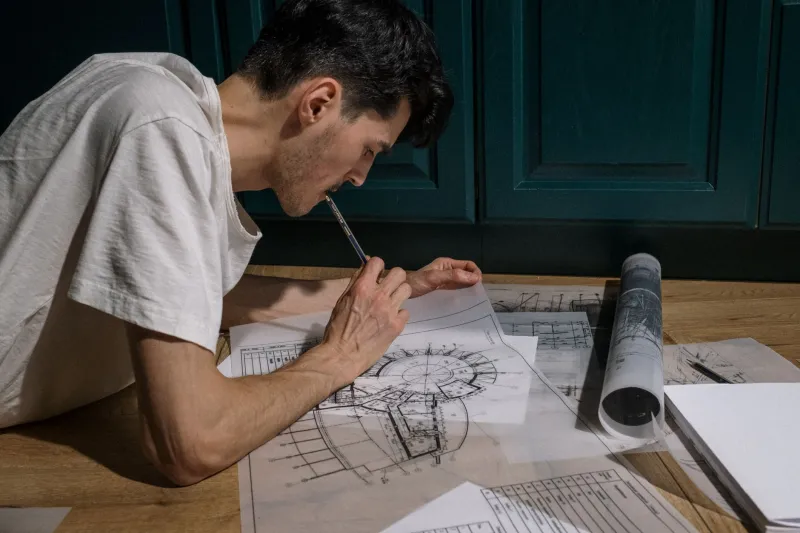
Once a conceptual direction has been approved by the festival's curatorial and production teams, the real technical work begins. For light-based installations, this phase involves collaboration with electrical engineers, structural consultants, and — increasingly — software developers who write the custom code that drives dynamic lighting sequences.
Artists who have navigated this stage describe it as a humbling education. Creative ideas that seem straightforward on paper frequently collide with the hard limits of electrical load capacity, weatherproofing requirements, and material weight restrictions. A vision involving thousands of suspended illuminated elements, for instance, must be reconciled with the load-bearing specifications of whatever overhead structure the site provides — or the cost of engineering an entirely new one.
Budget negotiations during this period are frank and sometimes difficult. The gap between an artist's initial vision and what the production budget can support is a recurring reality of professional-scale festival work. Experienced artists speak of learning to treat these constraints not as defeats but as creative parameters — boundaries that often push the work toward more disciplined and ultimately more powerful solutions.
Months Five Through Eight: Fabrication and the Art of Problem-Solving
With technical drawings finalized and materials sourced, fabrication begins. Depending on the scale and complexity of the installation, this work may take place in the artist's own studio, in a rented fabrication facility, or across multiple workshops simultaneously. Custom components — specialized lighting fixtures, hand-fabricated structural elements, proprietary diffusion materials — are often produced by small manufacturers who must be briefed carefully on the precise requirements of the work.
This phase surfaces the unexpected with remarkable regularity. A diffusion material that behaves beautifully in a studio environment may perform entirely differently when exposed to humidity or temperature fluctuation. A lighting sequence that reads with clarity at small scale can lose its rhythm when expanded to cover several thousand square feet. Prototyping and iterative testing are not optional luxuries; they are essential disciplines.
Collaboration during fabrication extends well beyond the artist's immediate team. Conversations with the festival's site operations staff, safety officers, and neighboring installation teams become part of the daily rhythm. The Yuguang Art Festival's production infrastructure supports this process actively, providing artists with access to technical resources and institutional knowledge that would be difficult to replicate independently.
Months Nine Through Eleven: The Long Road to Site
As the festival date approaches, attention turns to the logistics of transport, site preparation, and installation. For large-scale work, this can involve freight coordination across multiple states, the scheduling of specialized rigging crews, and the management of narrow installation windows dictated by the festival's broader site build timeline.
On-site installation is where the work becomes fully three-dimensional for the first time — and where the gap between plan and reality is most vividly exposed. Dimensions that appeared generous on a CAD drawing may feel constrained once physical components are in place. Sightlines that seemed clear on a site map may be interrupted by infrastructure that was not visible in survey photographs. Artists and their teams must make real-time decisions, sometimes significant ones, under considerable time pressure.
This is also the phase that many artists identify as the most creatively alive. Forced improvisation, when approached with skill and flexibility, frequently produces solutions that are superior to the original plan. The work begins to speak back to its makers in ways that only physical presence in the actual space makes possible.
Month Twelve: First Light
The moment of first illumination — when the installation is powered on in its completed form, in its actual location, for the first time — carries a weight that is difficult to articulate. Every decision made over the preceding eleven months is present in that instant: every compromise, every revision, every problem solved at two in the morning in a fabrication shop.
For artists who have completed this journey, the experience consistently produces two simultaneous responses. The first is relief. The second is an immediate, clear-eyed assessment of what works and what does not — because there is always something, and there is almost always still time to address it before opening night.
What the audience encounters on the first evening of the Yuguang Art Festival is the visible surface of this invisible year. They experience the light, the scale, the sensation of moving through a space that has been fundamentally transformed by a single creative vision. They may not know the name of the material supplier who delivered the wrong specification three times before getting it right, or the engineer who recalculated the load ratings over a holiday weekend, or the artist who stood in the rain at midnight adjusting fixture angles by hand.
But the work carries all of it. And that, perhaps, is what makes the most enduring installations at Yuguang feel not merely beautiful, but earned.