No Judges, No Gatekeepers: How Yuguang Is Dismantling the Art World's Hierarchy
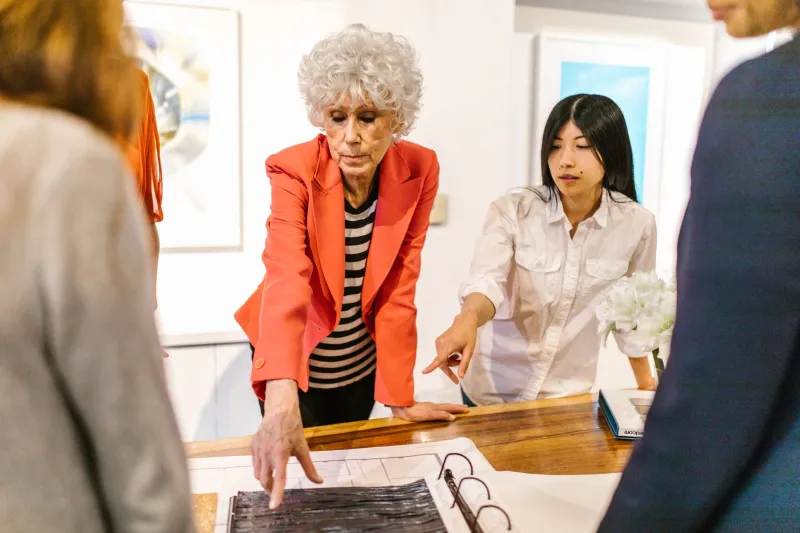
For generations, the American art world has operated according to a remarkably consistent set of unwritten rules. Success flows through a narrow channel: the right galleries, the right critics, the right academic pedigree, the right zip code. Talent, however extraordinary, is rarely sufficient on its own. Access to institutional validation has long determined which artists are elevated and which are quietly sidelined.
Yuguang Art Festival was not built to reform this system. It was built to bypass it entirely.
A Different Kind of Entry Point
The contrast becomes apparent the moment an artist begins the application process for Yuguang. Unlike many prestigious arts institutions — where submission requirements can run to dozens of pages, where letters of recommendation from established figures carry enormous weight, and where selection committees remain largely invisible and unaccountable — Yuguang's process is deliberately transparent and accessible.
Artists are evaluated on the strength of their concepts and their relationship to the festival's central themes, not on the length of their exhibition history or the prestige of their graduate program. The selection team includes not only curators but community representatives and past exhibitors — a structural choice that distributes evaluative authority rather than concentrating it.
"When I applied to Yuguang, I had three small group shows to my name and no gallery representation," said Priya Nair, a light installation artist based in Portland, Oregon, who has now exhibited at the festival twice. "At every other venue I'd approached, that résumé was essentially disqualifying. Here, no one asked me who my gallerist was. They asked me what I was trying to say."
That distinction — between credentialing and vision — sits at the heart of what makes Yuguang's culture feel genuinely different to the artists who pass through it.
The Critique Problem
In academic and gallery settings, critique occupies a central and often fraught role. The formal crit — in which an artist presents work to a panel of instructors, peers, or curators and receives structured feedback — can be a productive tool, but it can also reproduce the very hierarchies it purports to interrogate. Who speaks first matters. Who speaks longest matters. Whose vocabulary dominates the conversation determines whose ideas are treated as worth considering.
For artists from backgrounds underrepresented in elite arts institutions — first-generation college students, artists of color, creators working outside major metropolitan centers — the formal critique environment frequently functions as a mechanism of exclusion rather than development.
Yuguang does not operate a formal critique structure. In its place, the festival has developed what its organizers describe as a culture of "lateral feedback" — conversations between artists, between artists and visitors, between exhibitors and community members, that are grounded in curiosity rather than judgment.
"There's no panel. There's no grade. There's no one standing at the front of the room deciding whether your work is good enough," explained Jordan Whitfield, a mixed-media artist from Atlanta who participated in a Yuguang artist residency program. "What you get instead are people who are genuinely interested in what you made and why you made it. That's a completely different energy, and it produces completely different conversations."
Established Voices, Equal Ground
One of the more striking aspects of Yuguang's community-first philosophy is the way it shapes the behavior of its most established exhibitors. In traditional art world contexts, the hierarchy between emerging and established artists is rarely subtle. The power differential is encoded in everything from wall placement to opening-night seating arrangements.
At Yuguang, that differential is actively disrupted. Established artists are expected — and, according to many, genuinely willing — to engage with emerging creators as peers rather than as mentees or subordinates. The festival's physical layout reinforces this: there are no VIP areas, no separate programming tracks for "featured" versus "emerging" artists, no visible distinction between the treatment accorded to a nationally recognized name and that extended to a first-time exhibitor.
Clarence Obi, a sculptor whose work has been shown at major institutions across the country, has participated in Yuguang for three consecutive seasons. He describes the experience as something that recalibrated his own assumptions about artistic community.
"I've been in rooms where the hierarchy is so thick you can feel it," he said. "People deferring to the person with the biggest career, ideas only being taken seriously once the right person validates them. Yuguang doesn't feel like that. I've had some of my most genuinely useful conversations here with artists who were showing for the first time. That doesn't happen at most places."
Why This Matters Beyond the Festival
The implications of Yuguang's approach extend beyond the festival grounds and the artists who exhibit there. The culture that the festival models — accessible, non-hierarchical, grounded in genuine dialogue — represents an argument about what the American arts ecosystem could look like if it chose to organize itself differently.
In a country where arts funding is unequally distributed, where geography continues to determine access to creative opportunity, and where institutional prestige still functions as a primary currency of legitimacy, Yuguang's insistence on community-first values is a meaningful counterstatement.
It does not pretend that all art is equivalent in its ambition or execution. The festival maintains rigorous standards in its curatorial process and is transparent about that. What it rejects is the notion that those standards must be administered by a narrow class of credentialed insiders, or that the experience of engaging with art must replicate the social dynamics of exclusion that characterize so many traditional institutions.
"The art world can be brutal in ways that have nothing to do with the work itself," Nair observed. "Yuguang is one of the few places I've been where the work is actually the point. Not the career, not the connections, not the pedigree. Just the work, and whether it's saying something worth listening to."
For the artists who find their way to Yuguang — whether as exhibitors, visitors, or community participants — that orientation is not a minor amenity. It is, for many of them, the first time the art world has felt like a place they were genuinely invited to inhabit.
And that, in a field that has long confused exclusivity with excellence, may be Yuguang's most radical act of all.