The Morning After the Light: How Yuguang Ignites Creative Confidence That Outlasts the Festival
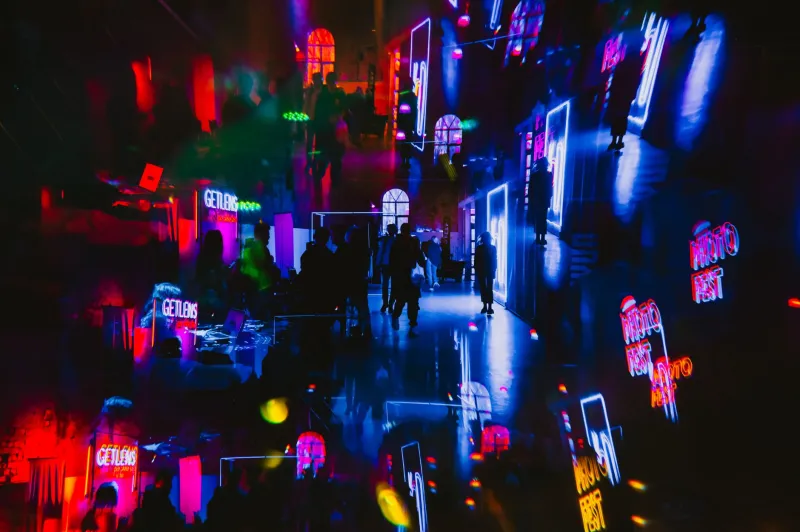
There is a particular kind of silence that follows an extraordinary experience — not emptiness, but a kind of charged stillness. For thousands of Yuguang Art Festival attendees across the United States, that silence has proven to be the beginning of something entirely new. Long after the LED installations have been dismantled and the grounds returned to their ordinary state, visitors report something unexpected: a persistent, almost stubborn belief that they, too, are capable of making something meaningful.
This is not coincidence. It is, according to researchers and festival participants alike, the Yuguang effect.
More Than a Memory
When Maya Ellison, a middle-school science teacher from Columbus, Ohio, attended Yuguang two years ago, she had not picked up a paintbrush in over a decade. Within three months of leaving the festival, she had enrolled in a community watercolor class, completed a series of abstract pieces inspired by the light installations she had witnessed, and submitted her work to a local gallery — where two pieces sold.
"I remember standing inside one of the large immersive rooms and thinking, 'Someone made this. A person, not a machine, not a corporation — a person with an idea decided to try,'" she recalled. "That thought wouldn't leave me. It kept asking me what I was waiting for."
Ellison's experience is far from isolated. In informal surveys conducted among Yuguang's community following each festival season, a striking pattern emerges: attendees — particularly those with no formal arts training — describe a measurable increase in creative risk-taking in the weeks and months that follow. New projects are started. Long-abandoned hobbies are revisited. In several documented cases, entire career pivots have been initiated.
The Psychology of Witnessing Possibility
Dr. Renata Voss, a behavioral psychologist based in Chicago who studies the intersection of awe and self-efficacy, has spent several years examining why large-scale arts events produce this kind of durable effect. Her findings point to a concept she calls "possibility modeling" — the psychological process by which witnessing ambitious, unconventional creative work recalibrates an observer's sense of what is achievable.
"When people encounter art that feels genuinely astonishing — work that pushes past their assumptions of what a person can make — their internal ceiling for their own ambitions quietly rises," Dr. Voss explained. "The festival environment amplifies this because it is communal. You are not looking at a painting alone in a gallery. You are surrounded by hundreds of other people having the same experience of wonder, and that shared response validates your own emotional reaction."
This validation, she argues, is critical. In everyday life, creative impulses are frequently suppressed by social fear — the worry that one's ideas will be dismissed, ridiculed, or simply ignored. The festival environment, by contrast, normalizes expressive ambition. When an attendee sees an artist's wildly experimental light sculpture receiving reverent attention from a crowd, the implicit message is clear: creativity is not only acceptable here, it is celebrated.
The Architecture of Inspiration
Yuguang's curatorial philosophy is deliberately constructed to produce exactly this kind of response. Rather than organizing installations in a hierarchical manner that implicitly ranks artistic merit, the festival situates work by emerging creators alongside established names without differentiation. A first-time exhibitor's piece may be encountered immediately before or after a work by a nationally recognized artist — and visitors often cannot tell the difference without consulting the program.
This design choice is not accidental. The festival's curatorial team has long maintained that the goal is not merely to display excellent art, but to dissolve the psychological distance between the observer and the act of creation itself.
"We want every single person who walks through this festival to leave feeling implicated in creativity," one member of the curatorial team noted during a recent community forum. "Not as a passive admirer, but as someone who belongs in the conversation."
For many attendees, that sense of belonging proves to be the catalyst that years of conventional arts education or museum visits never provided.
When Wonder Becomes Work
Marcos Delgado, a freelance graphic designer from San Antonio, Texas, attended Yuguang on what he describes as a whim — a friend had a spare ticket and he had no particular plans for the weekend. He arrived with modest expectations and left, he says, "with a problem I couldn't stop thinking about."
The problem was light itself. Delgado had never considered it as a medium. After spending an afternoon moving through installations that used projection, refraction, and shadow in ways he had never imagined, he found himself unable to stop sketching concepts for his own experiments. Within six months, he had built a small light-art installation in his garage, documented the process, and begun consulting on environmental design projects that incorporated programmable LED systems.
"I didn't go to art school. I don't have a fine arts background," he said. "But Yuguang showed me that those credentials weren't the point. The point was having a vision and being willing to try."
This sentiment — that the festival democratizes the act of creation — surfaces consistently among attendees who report post-festival creative surges. The experience appears to function less as an inspiration in the traditional sense and more as a permission structure: an implicit social contract that tells visitors their creative instincts are worth honoring.
The Long Arc of a Single Weekend
What makes the Yuguang effect particularly notable is its durability. Unlike the fleeting motivation that can follow a compelling film or an afternoon in a museum, the shifts attendees describe tend to be structural rather than temporary. They do not simply feel inspired for a day or two; they describe a reorganization of how they think about their own creative identity.
Dr. Voss attributes this to the intensity and multisensory nature of the festival environment. "Awe experiences that engage multiple senses simultaneously — sight, sound, spatial awareness — tend to produce more lasting cognitive shifts than those that engage a single sense," she explained. "The brain encodes them differently. They become anchor memories, and anchor memories have a way of continuing to influence behavior long after the event itself."
For Yuguang, this means that the festival's impact extends far beyond its official dates. In living rooms, garages, community centers, and studios across the country, the light that visitors encountered during a single weekend continues to illuminate something.
The festival may last only a matter of days. But for many who pass through it, the creative confidence it kindles endures considerably longer — and that, perhaps, is its most significant artistic achievement of all.