Illuminated and Healed: What Science Is Discovering About Art Festivals and the Mind
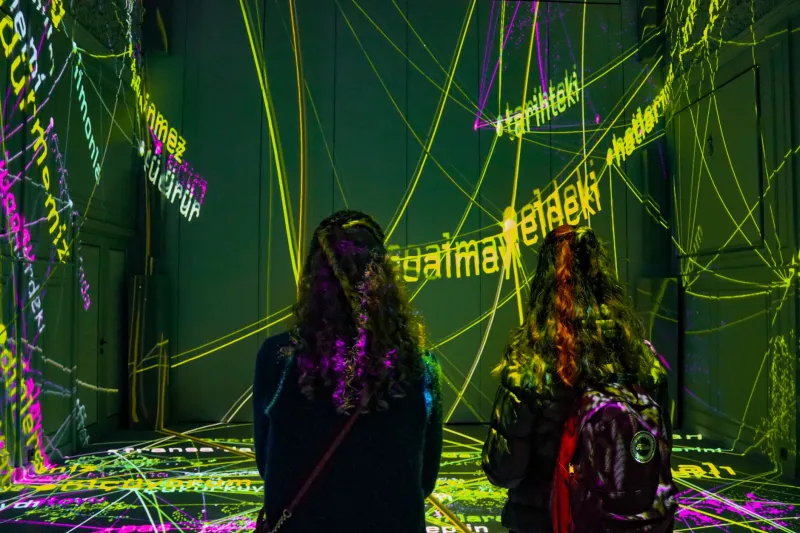
The language people use to describe their most powerful moments at immersive art festivals is strikingly consistent. Words like "transported," "dissolved," and "connected" appear with remarkable frequency in the accounts of attendees across age groups and backgrounds. These are not merely poetic descriptions. Increasingly, they correspond to measurable physiological and psychological states that researchers are only beginning to fully understand.
As immersive festivals have grown into a significant feature of American cultural life, a parallel inquiry has emerged in the fields of neuroscience, clinical psychology, and public health: what, precisely, are these experiences doing to the people who have them — and could that effect be harnessed deliberately for therapeutic benefit?
What Happens to the Brain in Awe
The emotional state most commonly reported by festival attendees — a kind of expansive, self-transcending wonder — corresponds to what psychologists formally term "awe." Research into this particular emotion has accelerated considerably over the past decade, and the findings are striking.
Studies conducted at institutions including the University of California, Berkeley, have found that experiences of awe are associated with reduced activity in the brain's default mode network — the neural system most closely associated with self-referential rumination, which is elevated in individuals experiencing anxiety and depression. In plain terms, awe quiets the internal monologue that underlies so much psychological distress.
Dr. Elena Vasquez, a clinical psychologist based in Los Angeles who has studied the intersection of aesthetic experience and mental health, describes this mechanism as one of the most promising areas in her field. "When we encounter something genuinely vast and beautiful — something that challenges our existing frameworks — we stop narrating ourselves for a moment," she explains. "For people who live trapped inside anxious thought patterns, that interruption can be genuinely therapeutic."
Festival environments like Yuguang, which combine large-scale visual spectacle with immersive sound, communal gathering, and physical movement through curated space, are unusually effective at inducing this state. The combination of sensory inputs, Dr. Vasquez notes, creates a kind of cognitive saturation that makes sustained self-focus difficult — and that difficulty, paradoxically, is precisely the point.
The Social Dimension of Healing
The individual neurological response to immersive art is only part of the story. Equally significant, researchers argue, is the social context in which festival experiences occur.
Human beings are profoundly social animals, and the epidemic of loneliness that has been documented across American society in recent years carries measurable mental health consequences. Surgeon General advisories, academic studies, and clinical reports have converged on the same conclusion: social isolation is a significant driver of anxiety, depression, and even physical illness.
Large-scale art festivals create what sociologists call "communal effervescence" — a shared emotional intensity among strangers that generates a temporary but powerful sense of collective belonging. This phenomenon, first described by the French sociologist Émile Durkheim in the context of religious ritual, is now being studied in secular contexts, including music events and visual art festivals.
"There is something that happens when a crowd of strangers all witnesses the same extraordinary thing at the same moment," says Dr. James Whitfield, a social psychologist at the University of Michigan who studies collective emotion. "People report feeling genuinely connected to those around them, even without speaking. That experience of non-verbal belonging is something many Americans are deeply hungry for."
Anecdotal evidence from festival attendees supports this framing. Interviews conducted with Yuguang visitors over multiple seasons consistently surface accounts of unexpected conversations with strangers, feelings of warmth toward unfamiliar people, and a sense — however temporary — of participating in something larger than individual life.
Therapists Take Notice
Beyond academic research, a number of practicing clinicians are beginning to incorporate art festival attendance into their therapeutic recommendations, particularly for clients managing social anxiety, depression, or trauma-related isolation.
The rationale is not simply that art is pleasant. Rather, it is that the specific combination of elements present at well-designed immersive festivals — reduced social pressure (no obligation to speak or perform), shared focus on an external object, gentle sensory stimulation, and physical presence in a living community — creates conditions that are genuinely difficult to replicate in clinical settings.
"I've started suggesting festival attendance the way I might suggest a nature walk or a yoga class," says Rebecca Cho, a licensed clinical social worker in Seattle. "Not as a replacement for therapy, but as a complement — a way of getting the nervous system into a regulated state and reminding the brain that the world contains beauty and other people."
Cho notes that several of her clients have reported lasting mood improvements following festival attendance, and that some have used the experience as a catalyst for broader social re-engagement. "One client went alone, ended up talking to three strangers, and came back describing it as the first time in two years she had felt genuinely present," she recalls.
The Case for Festivals as Wellness Infrastructure
The emerging picture from this body of research and clinical practice points toward a reconceptualization of what large-scale art festivals actually are — and what they could be, with intentional design.
At present, American society invests substantially in clinical mental health infrastructure: therapy, medication, crisis intervention. These resources are essential and irreplaceable. But the research on awe, communal experience, and aesthetic engagement suggests that cultural infrastructure — the festivals, public art programs, and community gatherings through which shared meaning is made — may also function as a genuine form of preventive mental healthcare.
The Yuguang Art Festival has always understood itself as more than an entertainment event. Its programming reflects a belief that art, experienced collectively, does something to people that ordinary social interaction cannot — that it opens a channel of feeling and connection that modern life tends to keep closed. The science, it now appears, is beginning to agree.
For the millions of Americans navigating the quiet weight of anxiety, disconnection, and psychological fatigue, that agreement carries real significance. The invitation to stand in the light — together, in wonder — may be more therapeutic than it looks.