Backyard to Big Stage: How Everyday Creators Are Mastering the Art of Light
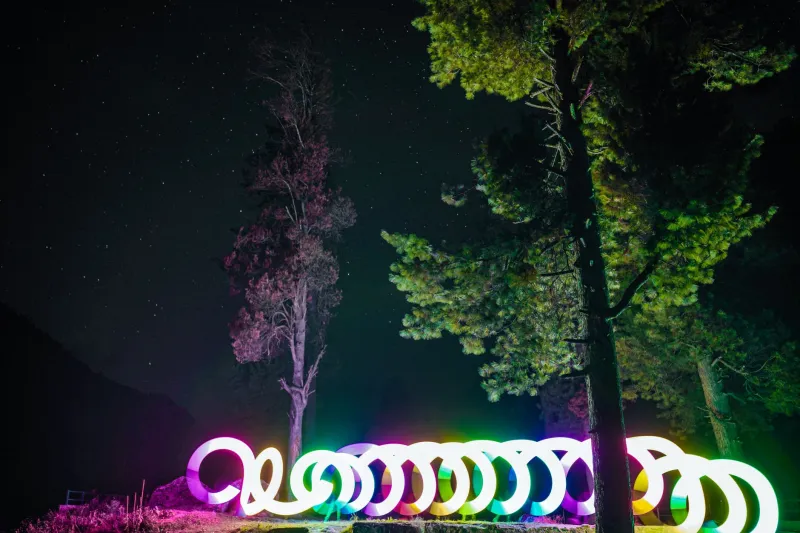
For decades, the world of large-scale light installation felt like a closed guild. The names that appeared on festival programs and gallery walls tended to belong to artists with institutional backing, engineering teams, and budgets that most creative enthusiasts could scarcely imagine. That picture is changing — rapidly and irreversibly.
Across the United States, a new generation of makers is producing light-based work of genuine visual power, not inside professional studios, but in driveways, basements, and community center parking lots. Their tools are affordable. Their knowledge is largely self-taught and peer-shared. And their work is beginning to attract audiences — and attention — that rivals that of far more established practitioners.
The Technology That Changed Everything
The single most consequential development behind this democratization is the dramatic decline in the cost of addressable LED technology. Individually programmable LED strips, which once carried price tags that made them prohibitive for casual experimentation, are now available through consumer electronics retailers for a fraction of their former cost. A hobbyist in Tucson or Tallahassee can today purchase the same fundamental building blocks used in professional festival installations for under one hundred dollars.
Complementing this shift is the maturation of open-source microcontroller platforms. Systems such as Arduino and Raspberry Pi — both widely available and supported by enormous online communities — allow creators without formal engineering training to program complex lighting sequences, reactive behaviors, and synchronized color transitions. Tutorials exist for nearly every conceivable application, and user forums provide the kind of real-time troubleshooting that previously required a paid technical consultant.
"I had never written a line of code in my life before I started this," says Marcus Delgado, a high school art teacher in Sacramento who has spent the last three years building increasingly ambitious light sculptures in his backyard. "I watched videos, asked questions in forums, and just kept failing until I didn't. Now I have a twelve-foot illuminated arch that I built for under four hundred dollars."
Delgado's installation — a sweeping geometric structure clad in individually addressed LED nodes and programmed to shift color in response to ambient sound — drew more than three hundred visitors during a neighborhood open-house event last autumn. Several attendees, he notes, told him it reminded them of pieces they had seen at professional light festivals.
Communities Built Around Light
The knowledge infrastructure supporting these amateur creators is as important as the technology itself. Online communities dedicated to DIY light art have grown substantially over the past several years, with forums, Discord servers, and social media groups hosting tens of thousands of members who share designs, troubleshoot technical problems, and celebrate one another's finished work.
Platforms such as Instructables and Hackaday host detailed project walkthroughs contributed by makers at every skill level, creating a freely accessible library of light art education. Regional maker spaces — community workshops offering shared tools, equipment, and expertise — have also become critical nodes in this network, providing access to laser cutters, 3D printers, and fabrication materials that individual creators might not otherwise afford.
In cities including Portland, Denver, and Austin, informal collectives of light artists have begun organizing neighborhood installations and pop-up exhibitions, blurring the line between private hobby and genuine public art practice. Some of these collectives have grown sophisticated enough to pursue formal event permits and seek modest municipal funding.
"What strikes me about this community is how genuinely generous people are with what they know," says Priya Nair, a software developer in Chicago who moonlights as a light installation artist. "Nobody is hoarding techniques. If you figure out something clever, you share it. That culture of openness is what makes the whole thing work."
Nair's most recent project — a series of illuminated geometric panels suspended in her apartment building's courtyard — was assembled almost entirely from components she sourced through community recommendations, at a total cost of roughly six hundred dollars.
Blurring the Line Between Amateur and Professional
Perhaps the most culturally significant dimension of this movement is the challenge it poses to longstanding assumptions about artistic legitimacy. The traditional markers of professional credibility in the visual arts — gallery representation, institutional residencies, formal credentials — carry diminishing weight when a self-taught creator in New Jersey can produce work that is visually indistinguishable from pieces shown at major festivals.
This is not to suggest that professional light artists lack distinct expertise. The engineering demands of large-scale public installations — structural load calculations, weatherproofing for outdoor environments, electrical safety compliance — remain genuinely complex and require specialized knowledge. But the expressive and aesthetic dimensions of light art are increasingly accessible to anyone with curiosity, patience, and a willingness to learn.
At the Yuguang Art Festival, this democratization resonates deeply with the event's foundational commitment to expanding the conversation around who creates and who participates in cultural life. The festival has long held that light, as a medium, possesses a particular kind of universality — it speaks to audiences across age, background, and experience level in ways that few other artistic forms can claim.
The backyard builders and garage experimenters now joining this tradition are not diluting it. They are extending it, carrying it into neighborhoods and communities that formal festival circuits rarely reach, and in doing so, they are ensuring that the art of light remains as vital and inclusive as the medium itself demands.
Getting Started: What Aspiring Light Artists Should Know
For those inspired to begin their own exploration, the barrier to entry has never been lower. Basic LED strip kits with programmable controllers are widely available online and in electronics retailers. Beginner-friendly platforms like WLED — open-source firmware designed specifically for LED control — offer browser-based interfaces that require no coding knowledge to operate. Community makerspaces in most mid-sized American cities offer introductory workshops on electronics and fabrication.
The more intangible requirement is simply a tolerance for iteration. Every practitioner interviewed for this article described a learning curve marked by failed prototypes and unexpected technical obstacles. What sustained them, uniformly, was the community surrounding the practice — and the singular experience of watching a design they had imagined finally come alive in light.
That experience, it turns out, is available to far more people than the art world once acknowledged.