Strangers No More: How Shared Wonder at Yuguang Forges Lasting Human Bonds
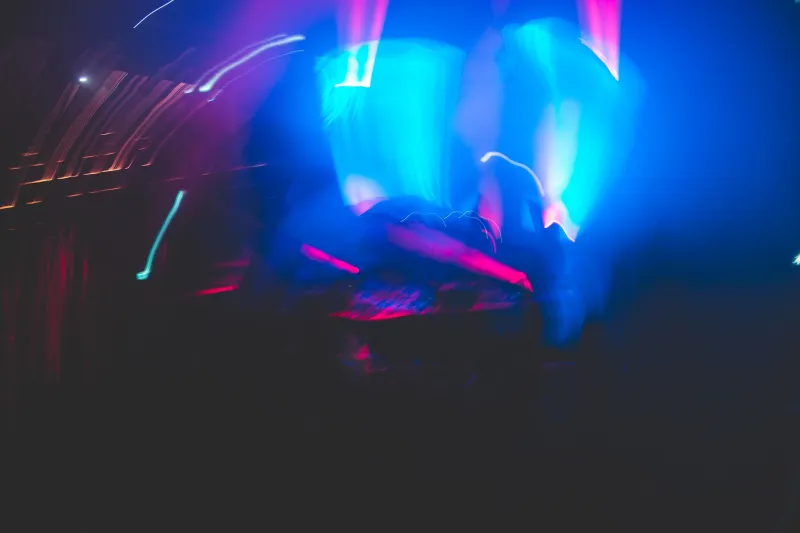
There is something quietly radical about standing in the dark beside someone you have never met, both of you rendered speechless by the same cascade of light. No introduction is required. No small talk precedes the moment. The art does the work that ordinary social settings rarely accomplish — it strips away pretense and invites an unguarded version of the self to step forward.
This is the phenomenon that festival-goers at Yuguang Art Festival have been describing with striking consistency: the emergence of genuine, lasting friendships from encounters that began not with a handshake or a swipe, but with a shared gasp in the glow of an installation.
In a country where surveys consistently report that Americans are lonelier than at any previous point in recorded history — the U.S. Surgeon General declared loneliness a public health epidemic in 2023 — the social architecture of immersive art festivals deserves serious attention.
The Sociology of Collective Awe
Dr. Renata Morales, a sociologist at the University of Michigan who studies communal experience and social cohesion, has spent years examining what she calls "wonder events" — moments in which individuals experience awe simultaneously with others.
"When people encounter something that exceeds their existing mental frameworks, they instinctively reach outward," she explains. "It is a deeply human reflex. You want to confirm that what you are experiencing is real, and in doing so, you make contact with the person beside you in a way that feels immediate and unfiltered."
This dynamic, she argues, distinguishes the social encounters that occur at immersive art festivals from those at more conventional venues. Bars, parties, and networking events place the burden of connection on the individual — on charm, confidence, and conversational skill. An immersive installation, by contrast, provides the connective tissue itself. The art becomes a shared third presence that removes the awkwardness of initiation.
"There is very little ego performance happening when someone is genuinely moved," Dr. Morales notes. "And that authenticity is contagious."
Stories From the Festival Floor
Jamila Osei, a graphic designer from Atlanta, attended Yuguang for the first time two years ago on a solo trip she had almost canceled. She describes wandering into a large-scale light installation — a room in which thousands of suspended fiber-optic threads responded to visitors' movements — when she noticed a woman standing beside her, tears streaming quietly down her face.
"I didn't know what to do," Jamila recalls. "I just put my hand on her shoulder. She laughed and said, 'I don't even know why I'm crying.' And that was it. We spent the rest of the evening together."
That woman, Priya Nair, a school counselor from Chicago, has since become one of Jamila's closest friends. The two speak weekly, have visited each other across state lines, and returned to Yuguang together the following year.
"I've tried to explain it to people and they look at me like I'm describing something from a movie," Priya says. "But it was real. The festival created a space where I wasn't performing anything. I was just a person having an experience. And so was she."
Theirs is not an isolated story. Across online communities and in conversations with festival staff, similar accounts surface repeatedly — friendships that began in the liminal space between installations, in the quiet aftermath of something beautiful.
Why Darkness Lowers the Drawbridge
The physical environment of an immersive art festival is not incidental to the connections it produces. Dimly lit spaces, research suggests, play a meaningful role in reducing the social vigilance that people carry through their daily lives.
A study published in the Journal of Environmental Psychology found that lower ambient lighting is associated with reduced self-consciousness and a greater willingness to engage in candid conversation. When we cannot be fully seen, we are paradoxically more willing to be known.
At Yuguang, this principle is embedded in the design of the festival itself. Installations are crafted not merely to dazzle but to disorient visitors gently — to remove familiar spatial cues and place them in a state of heightened receptivity. In that state, the ordinary social calculus shifts.
"You're not thinking about how you look or what someone thinks of you," says Marcus Webb, a repeat Yuguang attendee from Portland, Oregon. "You're just present. And when you're present, you notice other people who are present, and something clicks."
Marcus met his closest collaborator — a musician with whom he has since co-produced two albums — at a Yuguang sound-and-light installation three years ago. Their initial exchange lasted approximately four minutes. It was enough.
Designing for Human Connection
The curatorial team at Yuguang has become increasingly intentional about fostering the conditions under which these encounters occur. While the festival does not manufacture connection — it cannot, and would not attempt to — it does design spaces that make spontaneous interaction more likely.
This includes the deliberate placement of pause points within installations: areas where the visual experience invites stillness rather than movement, creating natural gathering moments. It includes programming that encourages small-group engagement rather than solitary consumption. And it includes an atmosphere that communicates, implicitly but unmistakably, that the people around you are worth your attention.
"We think a great deal about the human choreography of the festival," says one member of the Yuguang programming team. "The art is the reason people come. But the people are the reason they return."
A Counterpoint to the Curated Self
Perhaps what makes Yuguang's social ecosystem so distinctive is what it lacks: the performance layer that governs most American social life. In an age of personal branding, carefully managed social media personas, and the exhausting labor of self-presentation, the festival offers something almost subversive — a space in which none of that currency is accepted.
The darkness does not care about your follower count. The light does not respond to your credentials. What remains, when those layers are stripped away, is simply a person standing in wonder. And it turns out that is more than enough to begin a friendship.
For Jamila and Priya, for Marcus and his musical collaborator, and for the hundreds of others who have carried relationships home from the festival grounds, Yuguang has become something more than an art event. It has become a reminder that human connection, when the conditions are right, is neither as complicated nor as rare as the modern world sometimes makes it feel.
It begins, more often than not, with a shared moment of not knowing what to say — and choosing to stay anyway.