Art as Antidote: How Immersive Festivals Are Quietly Healing a Nation in Crisis
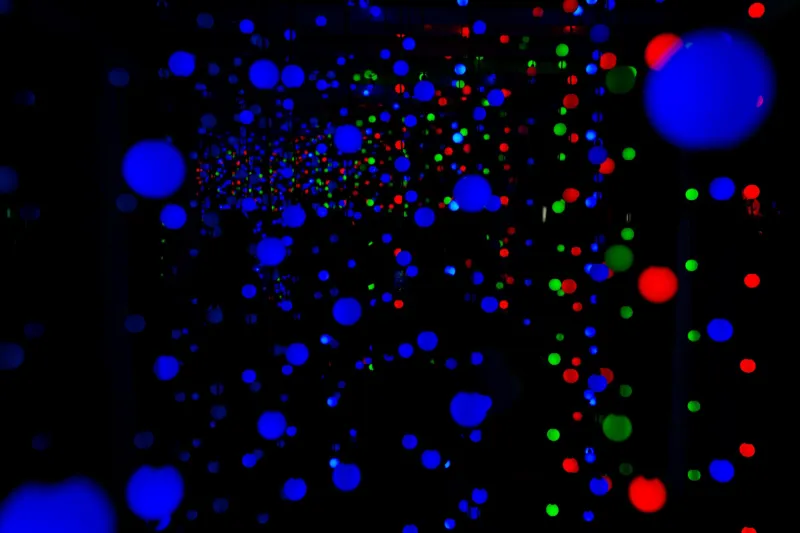
Something quietly extraordinary happens when a person steps beneath a canopy of shifting light, surrounded by strangers who have momentarily suspended their daily burdens to witness something beautiful together. It is not magic, though it can feel that way. Increasingly, researchers and mental health professionals are pointing to a more grounded explanation: immersive art festivals like the Yuguang Art Festival are functioning, with remarkable consistency, as informal yet powerful spaces of psychological restoration.
The timing could not be more pressing. The United States is navigating what the Surgeon General has described as a mental health crisis of generational proportions. Rates of anxiety, depression, and social isolation have climbed steadily since the early 2020s, and access to traditional therapeutic care remains unevenly distributed across income levels, geography, and demographics. Against this backdrop, the emergence of large-scale, community-centered art experiences as a complementary form of mental wellness is less a trend than a quiet revolution.
The Science Beneath the Surface
Dr. Layla Okafor, a cognitive neuroscientist at the University of Michigan who studies emotional responses to aesthetic environments, describes what she calls the "awe cascade"—a physiological sequence triggered when a person encounters something that simultaneously overwhelms and delights their perceptual faculties. "Awe has a measurable effect on the nervous system," she explains. "It activates the default mode network in ways that are associated with reduced self-referential thinking—the kind of rumination that underlies so much anxiety and depression."
In plain terms: when you are genuinely awestruck, your brain temporarily stops catastrophizing. The light installations, immersive soundscapes, and large-scale sculptural environments that characterize festivals like Yuguang are, neurologically speaking, extraordinarily effective at inducing this state. The effect is not passive. Unlike scrolling through images of art on a screen, physical presence in an immersive environment engages multiple sensory systems simultaneously, deepening and prolonging the response.
Research published in the journal Emotion has further demonstrated that awe-inducing experiences increase prosocial behavior—people become more generous, more empathetic, and more inclined to connect with strangers—for measurable periods following the experience. At a festival, where tens of thousands of visitors move through shared spaces, this effect compounds across a community.
Therapists Are Paying Attention
Marcus Webb, a licensed clinical social worker based in Nashville, Tennessee, began recommending festival attendance to select clients approximately three years ago. "I was skeptical at first," he admits candidly. "It felt almost too informal—too fun—to be therapeutic. But what I kept hearing from clients was that these experiences were doing something that our sessions alone were not fully addressing: they were reconnecting people with a sense of wonder, with the feeling that the world contains more than their pain."
Webb now incorporates what he calls "experiential prescriptions" into holistic treatment plans for clients dealing with social anxiety, chronic depression, and post-pandemic isolation. He is careful to frame festival attendance not as a replacement for clinical care but as a meaningful supplement—one that addresses dimensions of healing that traditional therapy can struggle to reach. "There is something about being physically present among people who are all experiencing beauty at the same time," he says. "It dissolves a kind of loneliness that is very hard to treat in a clinical room."
This perspective is gaining traction within broader conversations about social prescribing—a model of healthcare gaining momentum in the United States, following years of successful implementation in the United Kingdom, in which physicians and therapists refer patients to community and cultural activities as part of their care plans.
The Festival as a Container for Grief and Renewal
For many visitors, the therapeutic dimension of a festival like Yuguang is not abstract. It is immediate and deeply personal. Consider the experience of Priya Nair, a 34-year-old graphic designer from Chicago who attended the festival during a period of profound grief following the loss of her mother. "I almost didn't go," she recalls. "Everything felt pointless. But a friend insisted, and there was this one installation—all these suspended light panels that shifted color in response to sound—and I just stood there and cried. Not from sadness. From something else. From feeling like beauty still existed."
Nair's experience reflects what psychologists refer to as "transcendent emotion"—an affective state that encompasses grief, awe, gratitude, and connection simultaneously. Far from being destabilizing, these moments are associated with post-traumatic growth: the capacity to find new meaning and resilience in the aftermath of loss.
The communal nature of the festival environment is central to this dynamic. Unlike a museum or a concert hall, where social norms often discourage emotional expression, immersive festivals create an atmosphere of shared vulnerability. Strangers weep together, laugh together, and sit in silence together. The social permission granted by the space is, in itself, a form of healing.
Designing for Wellness
The curators and artists behind Yuguang are increasingly aware of the psychological dimensions of their work, and many approach their practice with this responsibility in mind. Creating environments that feel genuinely safe—that invite emotional openness rather than mere spectacle—requires intentional design choices: the pacing of a visitor's journey through the space, the quality of light and its effects on mood, the presence of quiet areas for reflection alongside moments of sensory intensity.
This attentiveness to emotional architecture distinguishes the best immersive festivals from mere entertainment. When light is used not simply to dazzle but to evoke, when spatial design encourages both solitude and togetherness, the festival becomes something closer to a secular sanctuary—a place where, as Yuguang's own guiding principle suggests, light and art converge to bring culture alive in the fullest human sense.
A Prescription Worth Considering
America's mental health infrastructure is strained, underfunded, and incapable of meeting the scale of the current crisis through clinical means alone. This reality demands creativity—not only from policymakers and healthcare providers, but from the cultural sector itself. Immersive art festivals occupy a unique position: they are accessible, communal, emotionally resonant, and capable of reaching populations who might never seek conventional therapeutic care.
The evidence, both scientific and anecdotal, is compelling. Wonder heals. Beauty connects. Shared experience dissolves isolation in ways that are difficult to replicate in any other setting. As the Yuguang Art Festival continues to grow and evolve, its significance extends well beyond the realm of entertainment. It is, for many of its visitors, nothing less than a place to come back to themselves.