Designing for Every Mind: How Neurodivergent Voices Are Transforming the Festival Experience
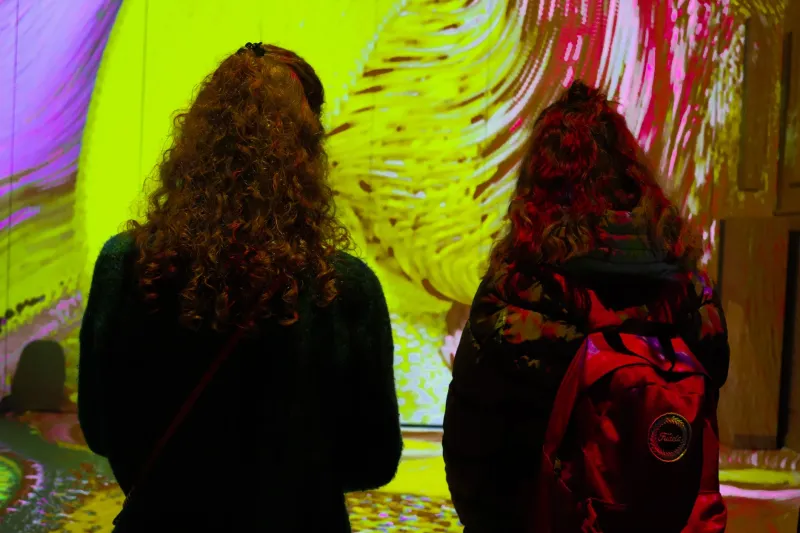
The word "immersive" carries an implicit promise: that an environment will surround and overwhelm the senses, pulling visitors out of their ordinary perceptual habits and into something larger. For many attendees, this is precisely the appeal. But for a significant and long-underserved portion of the population — individuals whose nervous systems process sensory input differently — the promise of overwhelming stimulation can function less as an invitation than as a warning.
At Yuguang Art Festival, a sustained and increasingly intentional engagement with neurodivergent artists, advisors, and community members is forcing a productive reckoning with this tension. The result is not a watered-down festival experience but a more sophisticated one — an approach to sensory design that honors the full spectrum of human neurological diversity.
Beyond the Ramp
Accessibility in cultural spaces has historically been conceived in physical terms: wheelchair ramps, captioned performances, tactile guides for visitors with visual impairments. These accommodations are essential, and Yuguang has invested meaningfully in them. But neurodivergent advocates have long argued that physical accessibility represents only one dimension of inclusive design.
Approximately one in five Americans identifies as neurodivergent — a broad category encompassing autism spectrum conditions, attention-deficit/hyperactivity disorder, sensory processing differences, dyslexia, anxiety disorders, and a range of other cognitive and neurological profiles. For many in this group, the standard festival environment — characterized by unpredictable crowd density, layered sound design, strobing or rapidly shifting light, and the social pressure of shared public space — presents genuine challenges that no ramp can address.
"The physical infrastructure conversation has been happening for decades," said Marcus Webb, an autistic installation artist who contributed a piece to Yuguang's most recent season. "The sensory infrastructure conversation is maybe ten years old, and it's still mostly happening at the margins. But the margins are where the most interesting design thinking tends to start."
Artists as Advocates
Webb's contribution to the festival exemplified a growing movement among neurodivergent creators to treat their own perceptual experiences not as deficits to be managed but as design intelligence to be applied. His installation, which used slow-cycling bioluminescent light and deliberately sparse sound — long silences punctuated by single tones — was conceived in direct response to what he described as the "relentless saturation" of most immersive festival environments.
"I wanted to build something I could actually be inside," he explained. "Something that didn't require me to armor myself against it. And what I found was that the visitors who seemed most affected by the piece were often people who told me afterward that they'd been bracing themselves for the festival and hadn't expected to find anything they could rest in."
This observation points to a dynamic that accessibility researchers have documented repeatedly: design that serves people at the edges of a distribution tends to improve the experience for everyone near the center. A quieter, more calibrated sensory environment does not diminish the festival's impact; it expands the range of visitors who can access that impact fully.
Listening as a Design Process
Yuguang's evolving approach to neurodivergent inclusion has been shaped significantly by formal and informal feedback mechanisms. Post-festival surveys now include questions specifically addressing sensory experience. The festival's community liaison team has developed relationships with advocacy organizations including the Autism Society of America and CHADD (Children and Adults with Attention-Deficit/Hyperactivity Disorder), consulting with them during the planning process rather than after.
Perhaps more significantly, neurodivergent creators are increasingly represented not just as exhibiting artists but as consultants in the spatial and experiential design of the festival itself. This shift — from accommodation to collaboration — reflects a meaningful change in how the organization understands expertise.
"There's a version of accessibility that's about making exceptions for people who don't fit the default," said Dr. Amara Singh, an occupational therapist and sensory design consultant who has worked with Yuguang. "And then there's a version that's about questioning whether the default was ever as universal as we assumed. The second version produces better design. It just requires more humility."
Quiet Zones, Calibrated Paths
Among the concrete changes emerging from this collaboration are the introduction of designated low-stimulation zones throughout the festival grounds — spaces where ambient sound is reduced, lighting is steady and diffuse, and crowd flow is managed to prevent the density that can trigger sensory overload. These areas are not segregated from the main festival experience but integrated into it, connected to primary exhibition pathways and staffed by trained volunteers.
Navigation tools have also been redesigned. Festival maps now include sensory intensity ratings for individual installations, allowing visitors to plan routes that match their own comfort levels. A dedicated pre-visit guide, developed in consultation with autistic self-advocates, provides detailed descriptions of what each installation involves — not to eliminate surprise, but to replace involuntary overwhelm with informed choice.
"Predictability is not the enemy of wonder," Webb observed. "Knowing what kind of sensory environment I'm walking into means I can actually be present when I get there. I'm not spending cognitive resources managing anxiety. I'm free to actually look."
A Richer Definition of Immersive
The deeper contribution of neurodivergent voices to Yuguang's design process may be philosophical as much as practical. Their presence in the conversation has prompted a genuine examination of what "immersive" is meant to achieve — and whether the default assumption that more stimulation equals more impact holds up under scrutiny.
For many neurodivergent visitors and artists, the most immersive experiences are not those that flood the senses but those that create conditions for genuine attention. Depth rather than volume. Sustained engagement rather than momentary spectacle. These values, articulated most clearly by people whose sensory systems have always required them, are reshaping what the festival aspires to offer everyone who walks through its gates.
At Yuguang, where light has always been understood as a medium for meaning rather than mere spectacle, this expansion of purpose feels less like a departure than a deepening.