The Stallholders of Wonder: Inside the Vendor Economy That Feeds America's Art Festivals
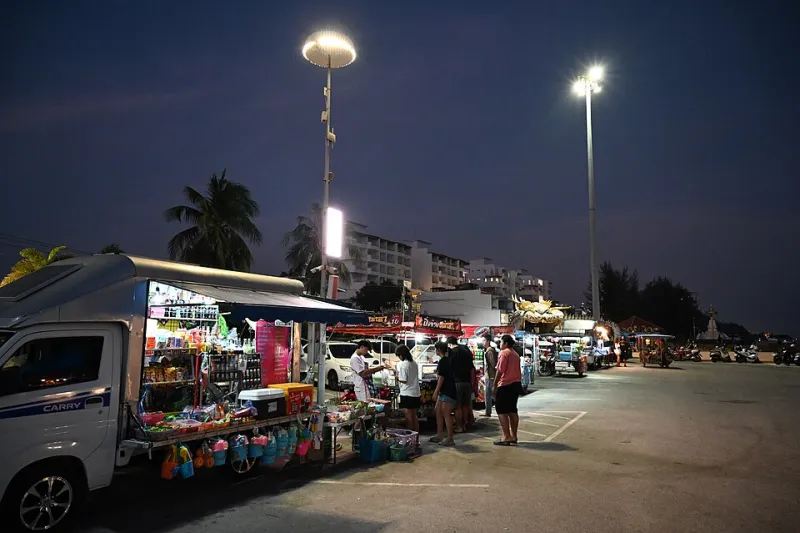
Photo: PattayaPatrol, CC BY-SA 4.0, via Wikimedia Commons
Walk past the glowing archways of any major immersive art festival in America and you will encounter a second festival operating in its shadow. It smells of wood smoke and cinnamon. It hums with the clink of hand-thrown mugs and the sizzle of a flat-top grill. And increasingly, it is the reason many attendees say they come back.
The Second Festival
For decades, food and craft vendors at cultural events were treated as concessions — a practical necessity, tucked along the perimeter and rarely mentioned in promotional materials. That era is ending. Festival organizers across the country now curate vendor lineups with the same rigor they apply to artist rosters, reviewing portfolios, visiting studios, and in some cases commissioning custom work that responds to the festival's theme.
At the Yuguang Art Festival, the vendor application process mirrors the jury process for installations. Applicants submit photographs of their craft, a statement of practice, and a plan for how their stall will engage the festival's landscape of light. A ceramicist whose glazes shift color under warm illumination is a far better fit than a larger operation selling mass-produced trinkets — and the selection committee knows it.
"We are building a village, not a food court," one veteran festival programmer explains. "Every stall is part of the composition."
Makers Who Tour
The vendors themselves have evolved into a professional class of cultural entrepreneurs. Consider the profile of the modern festival ceramicist: a studio potter who spends nine months of the year in a converted barn in Asheville or a shared workshop in Portland, then devotes the summer to a circuit of festivals from the Hudson Valley to the high desert of Oregon.
For these makers, a single festival weekend can generate a quarter of their annual revenue. But the economics are only part of the story. Festivals offer something a gallery or an online storefront cannot: thousands of face-to-face conversations with people who touch the work, ask questions, and carry a story home with the object.
Food artisans describe a similar calculus. A family-run dumpling operation from the San Gabriel Valley can test new menu items on a festival crowd before committing to them at a brick-and-mortar location. A small-batch hot sauce maker uses the season to build a mailing list that sustains sales through the winter. The festival, in effect, functions as a pop-up accelerator for businesses that might otherwise never scale.
Curation as Care
What distinguishes the new wave of festival vending is intentionality. Organizers increasingly think in terms of complementary pairings: a woodworker whose grain patterns echo the curves of a light installation placed along the same path; a tea vendor stationed at the quietest edge of the grounds where visitors naturally seek a moment of rest.
This attention extends to the vendors' own experience. Shared cold storage, coordinated load-in schedules, and fair booth fees have become markers of a well-run festival. Veteran stallholders talk about which events treat them as partners and which treat them as revenue — and they plan their seasons accordingly.
The relationship runs in both directions. Vendors become informal ambassadors, returning year after year with loyal followings that boost ticket sales. Some festivals now feature vendor spotlights in their marketing, giving a noodle master or a quilt maker the same billing once reserved for headline artists.
A Quiet Engine of Local Economies
Municipal officials have begun to notice what the vendor community has long understood: these small operations are economic engines. A weekend festival can channel significant spending to a region's temporary workforce, its farms, and its independent makers. In smaller American towns — the kind that have watched their main streets struggle — a well-vended festival can be the busiest commercial weekend of the year.
The challenge ahead is preserving the human scale that makes this economy work. As festivals grow, there is a gravitational pull toward corporate concessions and standardized offerings. The festivals that resist that pull — that keep a place at the table for the potter, the beekeeper, the grandmother selling hand-pies from a recipe three generations old — are the ones whose audiences return.
When the lights come up over the festival grounds, the installations may be what people photograph. But it is the stallholders, with their warm hands and warm food, who make the night feel like a place rather than a show.