The First Thirty Feet: An Argument for Designing the Arrival as Carefully as the Art
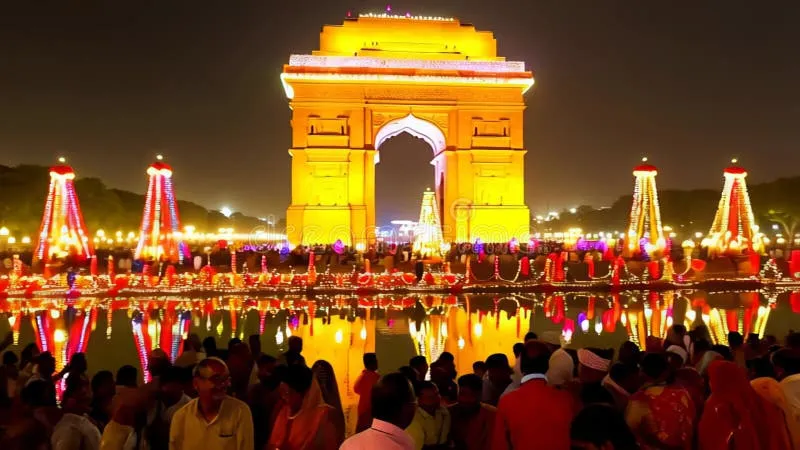
Photo: crowd entering illuminated festival entrance gate at night, via thumbs.dreamstime.com
Here is a truth the festival industry prefers not to say out loud: most American cultural events are magnificent in the middle and mediocre at the edges. The installations are extraordinary. The arrival is chaos.
Consider the typical opening night from the visitor's perspective. You circle a darkened lot for twenty minutes. You follow a chain-link fence toward a sound you hope is the entrance. You join a slow, shuffling line beneath portable floodlights — the harshest light you will encounter all evening — before a volunteer scans your ticket and hands you a map you cannot read in the dark. Then, and only then, does the art begin.
We have a term for this in other industries: a broken onboarding. We do not accept it from restaurants, airlines, or apps. Why do we accept it from events whose entire premise is wonder?
The Tyranny of the Backstage View
The problem is structural, not lazy. Festivals are built over months by crews who know every pathway by heart, and by opening night the organizers have long since stopped experiencing the grounds as a newcomer. The first thirty feet — from parking to first installation — is the portion of the journey no one on the production team has walked as a stranger in months.
Programming, by contrast, receives obsessive attention. Curators argue over the sequence of installations, the pacing of sound, the moment the main piece reveals itself. Yet all of that craft can be undercut in the first ninety seconds by a confusing sign, a bottleneck, or a porta-john positioned dead center in the sightline of the opening piece.
First impressions are not a soft metric. They are the frame around everything that follows.
Choreographing Wonder From the Parking Lot
The fix is neither mysterious nor prohibitively expensive. It requires applying the same design intelligence to the arrival that festivals already apply to the art. A few concrete commitments:
Design the threshold, not just the gate. The transition from ordinary world to festival world should be deliberate — a dimming of ambient light, a narrowing of path, a change in sound. The best festivals already do this at their entrance arches; the principle should begin at the car, not the ticket scan.
Put your worst-lit moment on a design review. If the most fluorescent thing on your site is the queue, you have surrendered the first impression to utilitarianism. Warm, low, directional lighting in the arrival zone costs little and changes everything.
Staff for the first question, not the last. Visitors' first questions — where do I go, what should I see first, where is the restroom — determine their whole evening's mood. Greeters in the arrival zone, not just at the gate, are the cheapest hospitality investment available.
Let the first installation greet the crowd. Rather than funneling arrivals past infrastructure toward a distant centerpiece, stage an accessible, high-impact piece within the first thirty feet — something that rewards the walk in and sets the tonal contract for the night.
Rehearse the arrival like a performance. Walk it at opening-night crowd density, at night, with a first-timer. If the experience frustrates your production manager's mother, it will frustrate your audience.
A Matter of Respect
There is a deeper point beneath the logistics. A chaotic arrival tells the visitor, however unintentionally, that their experience before the ticket scan did not count. A choreographed arrival tells them the opposite: that the event began the moment they decided to come.
American audiences are increasingly sophisticated about immersive experience. They will forgive a long line far more readily than they will forgive feeling lost, herded, or unconsidered. The festivals that understand this — that treat the parking lot as the prologue and the walkway as the overture — will not merely run more smoothly. They will move people sooner, and more deeply.
The art deserves a better first frame. So does the audience.