Why Immersive Art Stays With You: The Science of Cross-Sensory Memory
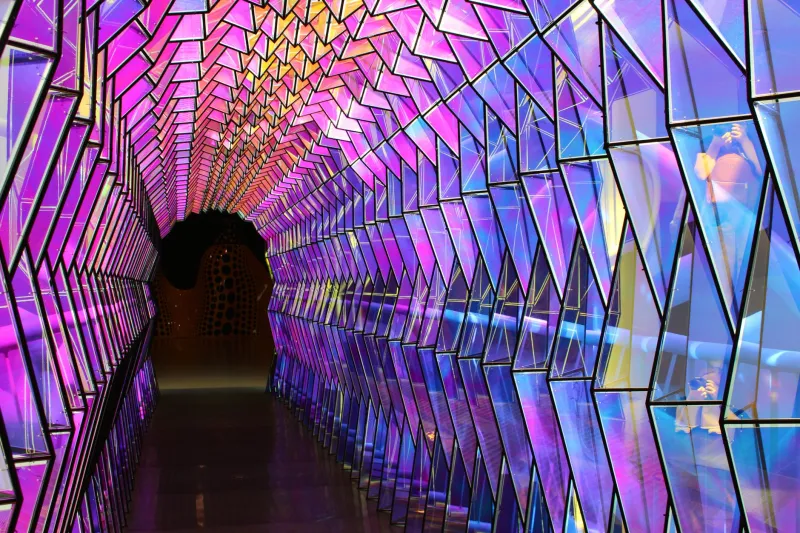
It happens in the most ordinary of moments. You are standing in line at a coffee shop, or watching rain trace patterns down a window, and suddenly a particular shade of amber light floods your mind with startling clarity. You are back inside a luminous corridor at an immersive art festival, the hum of a low frequency tone reverberating through your chest, the scent of damp earth rising beneath your feet. The memory is not summoned deliberately. It simply arrives — whole, vivid, and emotionally charged.
For many attendees of immersive light festivals like the Yuguang Art Festival, this kind of involuntary recall is not unusual. It is, in fact, one of the most commonly reported experiences among those who have walked through large-scale, multisensory art environments. And for researchers studying memory, perception, and the neuroscience of aesthetic experience, it raises a compelling question: why do these moments linger so persistently, and what does that persistence reveal about how immersive art affects the brain?
The Phenomenon Researchers Are Calling the Synesthesia Effect
To understand why festival memories behave differently from other kinds of recollections, it helps to consider the concept of synesthesia — a neurological phenomenon in which stimulation of one sense automatically triggers an experience in another. A person with auditory-visual synesthesia, for example, may perceive specific colors when they hear particular musical notes. While true clinical synesthesia affects a relatively small portion of the population, researchers believe that immersive art environments can temporarily induce a milder, experiential version of this cross-sensory blending in almost anyone.
Dr. Meredith Holloway, a cognitive psychologist at the University of Michigan who studies embodied memory and aesthetic experience, describes it this way: "When multiple sensory channels are activated simultaneously and in a coherent, emotionally resonant way, the brain encodes the experience with unusual depth. The memory isn't filed under a single category — it's distributed across auditory, visual, tactile, and even olfactory networks. That distribution is precisely what makes it so durable and so easy to involuntarily retrieve."
In other words, a traditional gallery experience — standing before a painting in a quiet, climate-controlled room — engages the visual cortex in relative isolation. An immersive festival installation, by contrast, recruits the entire sensory system at once, layering light with sound, spatial movement with temperature, and visual spectacle with the physical sensation of being inside rather than merely looking at a work of art.
Emotion as the Architect of Lasting Memory
Sensory breadth alone does not fully explain why these memories persist. Emotion, researchers emphasize, is the critical amplifier. The amygdala, a small almond-shaped structure in the brain's temporal lobe, plays a central role in tagging experiences with emotional significance. When an experience is perceived as novel, beautiful, or awe-inspiring, the amygdala signals to the hippocampus — the brain's primary memory consolidation center — that this moment is worth preserving in extraordinary detail.
Awe, in particular, has attracted significant scientific attention in recent years. Studies conducted by researchers at the Greater Good Science Center at UC Berkeley have found that awe-inducing experiences produce measurable changes in how memories are formed and how long they are retained. Participants who reported feeling awe — defined as a sense of vastness that challenges existing mental frameworks — demonstrated stronger and more detailed recall of those moments weeks after the experience, compared to moments that were merely pleasant or interesting.
For festival-goers at Yuguang, where light installations are deliberately designed to overwhelm the senses and dissolve the boundary between the artwork and the observer, awe is not incidental. It is architectural. "There's a specific moment in a well-designed immersive environment where you stop analyzing and just feel," says Chicago-based installation artist Tomás Reyes, whose light-based work has been shown at festivals across the United States. "That surrender is what the best immersive art is after. And I think that's also the moment the brain says: remember this."
When the Ordinary World Triggers the Extraordinary Memory
What distinguishes immersive art memories from other emotionally significant experiences is the frequency and unexpectedness with which they resurface. Festival attendees consistently report encountering involuntary recall not in moments of deliberate reflection, but in response to sensory cues embedded in everyday life.
Amanda Cho, a graphic designer from Portland, Oregon, attended a large-scale light festival in the Pacific Northwest two years ago and still finds herself returned to a specific installation without warning. "It was a tunnel of slowly pulsing blue light with this low, almost subsonic sound underneath it. I remember feeling like my heartbeat slowed down to match it. Now, sometimes when I hear a certain kind of ambient music — not even the same music — I'm back there. The feeling is immediate and completely physical."
This phenomenon, known in memory research as cue-dependent retrieval, occurs when a sensory element in the present environment shares enough structural similarity with a detail encoded during the original experience to activate the associated memory network. Because immersive festival memories are encoded across so many sensory dimensions, they have a correspondingly large number of potential retrieval cues in the everyday world — a particular quality of light, a vibration in the floor, a temperature shift, a specific color temperature in a sunset.
How Immersive Art Rewires the Brain Differently
Perhaps the most significant implication of this research is what it suggests about the lasting neurological impact of immersive art exposure. Traditional art encounters, however meaningful, rarely produce the kind of cross-modal encoding that researchers are documenting in festival contexts. The question researchers are now beginning to explore is whether repeated exposure to immersive, multisensory art environments produces measurable changes in perceptual sensitivity and creative cognition over time.
Preliminary findings from a longitudinal study conducted at New York University's Center for Neural Science suggest that individuals who regularly attend immersive art events demonstrate heightened activity in brain regions associated with imaginative thinking and sensory integration, even when performing unrelated cognitive tasks. While the research is still in its early stages, the implications are intriguing: immersive art may not simply provide an experience. It may, over time, recalibrate the way the brain perceives and processes the world.
"What we're seeing is that the brain doesn't just store these experiences as memories," says Dr. Holloway. "It seems to use them as reference points — new templates for what it means to perceive something beautiful or overwhelming. In that sense, immersive art isn't just entertainment. It's a form of sensory education."
The Festival as a Site of Lasting Transformation
At Yuguang Art Festival, the ambition has always extended beyond spectacle. The festival's curatorial philosophy holds that art, at its most powerful, does not end when the visitor exits the installation. It travels with them — embedded in memory, reshaping perception, surfacing unexpectedly in the texture of ordinary life.
The science, it turns out, appears to agree. When light meets art in an environment designed to engage the full human sensorium, something enduring is set in motion. The brain, flooded with awe and cross-sensory richness, commits the experience to a form of memory that ordinary moments rarely achieve. And long after the festival grounds have gone quiet, those encoded moments continue their work — arriving unbidden at a coffee shop window, in the particular slant of late afternoon light, in the low hum of a city street that suddenly, inexplicably, feels like wonder.